Mall History Test
Item set
Items
-

Dedication of the Lincoln Memorial
Over 35,000 people attended the dedication ceremony for the Lincoln Memorial in 1922, ten years after construction began. At the ceremony, President Warren G. Harding, former president and Chief Justice of the Supreme Court Howard Taft, and Robert Moton, Principal of Tuskegee Institute spoke about Lincoln’s legacy and how the memorial might help heal sectional tensions in the US. Harding’s address was broadcast on the radio using an experimental radiophone developed by the US Navy. Attendees included Union and Confederate Civil War veterans and President Lincoln's son, Robert Todd Lincoln. Though the event emphasized reconciliation and unity, audience members watched from segregated seating. -
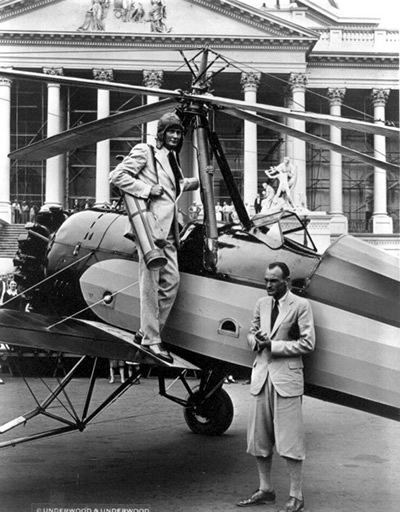
Senator Rides Autogiro from Capitol to Golf Game
On July 9, 1931, Senator Hiram Bingham boarded an autogiro at Capitol Plaza for a quick ride to the golf course. Bingham, a former pilot in World War I and supporter of the unique aircraft, used the opportunity to promote the safety and efficiency of the autogiro to a crowd of spectators and news media at the Capitol. The pilot, James Ray, transported Bingham from the Mall to Burning Tree Golf Club in 11 minutes, arriving 34 minutes faster than if he had driven. The Autogiro Company of America, founded by Harold F. Pitcairn, marketed the autogiro as a vehicle for the wealthy and frequently staged public events to promote sales of the aircraft. -
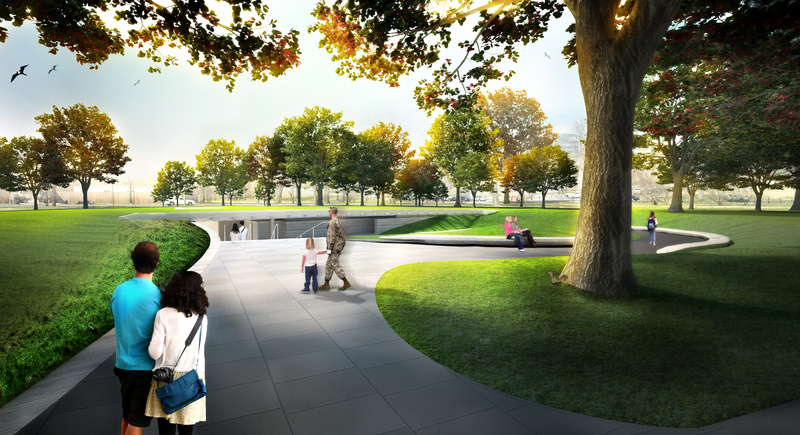
Vietnam Memorial Education Center
Jan Scruggs, President and Founder of the Vietnam Veterans Memorial Fund, proposed in 2000 to build an education center focusing on veterans' service in the wars following Vietnam. The planned center would have been located across the street from the Vietnam Veterans Memorial. It will display some objects that visitors have left at the Wall since 1982. Congress approved of the center in 2003, but the project did not break ground until 2012. In 2018, the VVMF announced their decision to cancel the building project, focusing instead on digital resources and online exhibits. -
Autogiro Flies over DC
In December 1928, Harold F. Pitcairn piloted an autogiro from Philadelphia to Washington, DC to introduce this new aircraft to Americans. It was reportedly the first extended autogiro flight in the US. Pitcairn was an airplane manufacturer. Paramount Pictures captured the flight over the Mall in this newsreel. It was part of Pitcairn's marketing efforts to sell autogiros as personal aircraft to the public and policymakers. -

Funeral at Sylvan Theater
In May 1921, two local American Legion posts held a funeral at the Sylvan Theater to honor men from the District of Columbia who died overseas during World War I. The remains of Hiram F. Cash and Vincent B. Costello were present at the funeral. Although World War I ended in 1918, the remains of soldiers killed in Europe were not returned to the US for another 3 years. Private Costello was one of the first men from the District to die in the war, and Lieutenant Cash was a Washington native who died on the Western European front. The American Legion posts in Washington, DC were named in their honor. -

Rejected design for the Statue of Freedom
This design of the Statue of Freedom was rejected for its reference to slavery. It was one of three designs developed by sculptor Thomas Crawford for the top of the Capitol dome. In 1856, he proposed a statue with a “Liberty Cap.” This style of cap was seen on images of "Liberty" during the American Revolution and was inspired by caps given to slaves in Ancient Rome at their emancipation. Jefferson Davis, Secretary of War at the time, strongly opposed the proposal. Davis, a slaveowner and later named President of the Confederate States of America, rejected any design that seemed critical of slavery. -
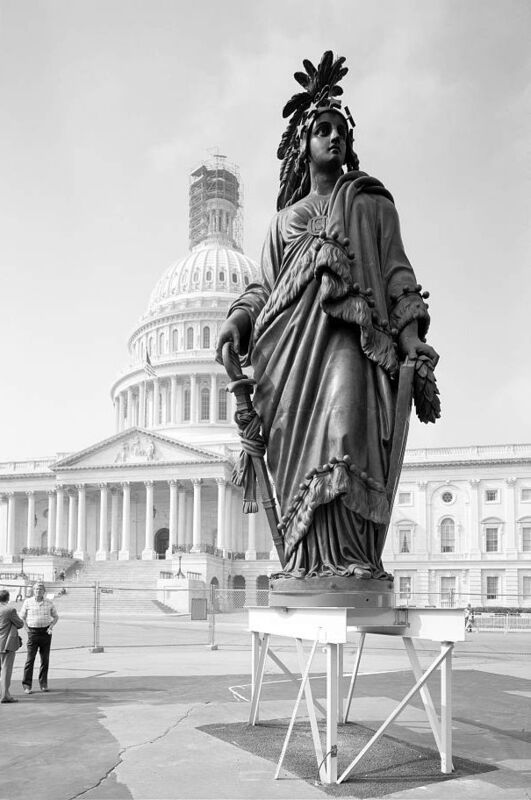
Statue of Freedom
In 1855, Congress commissioned Thomas Crawford to build a statue to top the cast-iron Capitol dome. Two years later, Crawford created the plaster model in Rome and sent it to the US for casting. The bronze was cast at a foundry in Washington DC under the supervision of Philip Reid, an enslaved man. Casting was briefly interrupted by the beginning of the Civil War, but was completed by 1862. The statue stood on the Capitol grounds until the dome was completed. The statue was installed in stages, with the final pieces added in December 1863. Today, the Capitol Visitor Center displays the plaster model of the statue. -

The Wedding
On October 10, 1987, 2,000 same-sex couples pledged their vows in a mass wedding behind the National Museum of Natural History and in front of the Internal Revenue Service building. The location allowed the group to protest the lack of recognition of same-sex domestic partners in the US tax code. Organizers also admitted that location was the only area where they could secure a permit to gather. Nearly 5,000 protesters filled the streets to watch or participate in the mass wedding presided over by minister Dina Bachelor. "The Wedding" was 1 event in a 6-day demonstration known as the Second National March on Washington for Lesbian and Gay Rights. -

White House Weddings
Since the wedding in 1812 of First Lady Dolley Madison's sister, close friends and family members of presidents married at the White House. A total of 17 couples tied the knot in the White House, including President Grover Cleveland. Many of these ceremonies captured interest from the national press. In 1913, descriptions of Woodrow Wilson’s daughter Jessie’s wedding cake, pictured here, noted approvingly that it was not very extravagant. In contrast, Richard Nixon’s daughter Tricia wed in 1971 on live television while the event included a 7-foot tall wedding cake. -

Mall Weddings
Since 1976, the National Park Service has allowed weddings and other special events to be held in 3 areas: the DC War Memorial, the George Mason Memorial, and the west lawn of the Jefferson Memorial. Anyone reserving one of these spaces must pay an administrative fee and abide by National Park Service rules meant to protect the property. During the government shutdown in October 2013, the Mall, like all national parks, was closed for public events forcing at least one couple to relocate their wedding. In 2014, 148 permits were given to couples who wed near the majestic monuments. -

Smithsonian grounds neglected
In his annual report for the year 1856, Secretary of the Smithsonian Joseph Henry complained that Congress had not provided money in the Smithsonian's budget to maintain the Institution's grounds. As a result, he said that the area around the building looked neglected. This photograph accompanying the report showed the state of the grounds. Although the grass and plants were not overgrown, the area lacked a landscape design appropriate for a national institution. By 1858, a small amount finally was allocated to care for the Smithsonian grounds, even if it was not enough to implement a new design. -

Smithsonian Garden Shed
This shed stood south-east of the first Smithsonian building, now called the Castle. Smithsonian staff stored gardening and grounds keeping equipment used on the institution's grounds. This shed was removed in the 1870s when construction of the Arts and Industries Building began. Smithsonian staff require much larger facilities today, as they continue to landscape and maintain the grounds near all of the Institution's buildings on the Mall. -

Jose de Rivera
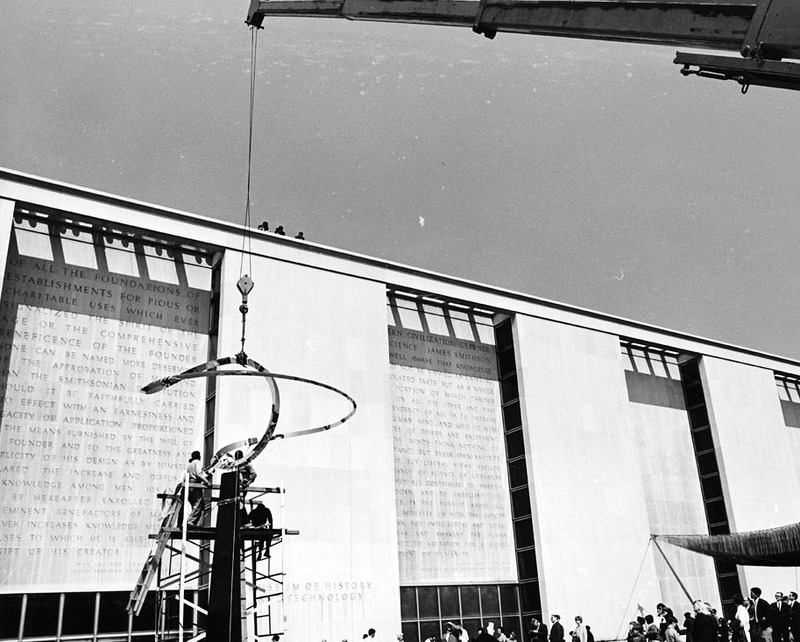
When the architect of the National Museum of History and Technology wanted an outdoor sculpture designed for the new museum opening in the mid-1960s, he recommended artist Jose de Rivera. Rivera was an established sculptor known for his abstract forms, kinetic elements, and experience designing for public spaces. de Rivera created, "Infinity," which stands on the Mall side of the building now called the National Museum of American History. In 1997, following de Rivera's death, his son donated some of the tools used to create "Infinity" for the museum's collections. -

Capitol Christmas Tree
Congress occasionally planted Christmas trees on the Capitol grounds, but it was not until 1964 when an annual ritual began. Senator Carl Hayden of Arizona, President Pro Tempore of the US Senate, presided over the first lighting ceremony on December 18. From 1964 to 1967, a live tree on the west side of the Capitol served as the official tree until it died in 1968. The Architect of the Capitol created a formal procedure for hosting "The People's Tree" in a specific location between the House and Senate sides. Since 1970, the US Forest Service has provided a tree selected from different national forests and delivers it with decorations made by school children from the tree's home state. -

First National Menorah Lighting
On the first night of Hanukkah in 1979, President Jimmy Carter walked from the White House to Lafayette Park to light the first public Menorah near the Mall. Sponsored by the American Friends of Chabad-Lubavitch, Abraham Shemtov and Levi Shemtov built the Menorah for several years. It was first called the National Menorah by President Ronald Reagan in 1982. The Menorah remained in Lafayette Square until 1987 when it moved to its current location on the Ellipse. The National Menorah is always lit by the President or a member of the President’s administration. -

First National Christmas Tree and Lighting Ceremony
On December 24, 1923, President Calvin Coolidge lit the first National Christmas Tree on the grounds of the Ellipse. Community volunteers and civic leaders, worked together with local schools and the Society of Electrical Development to organize the celebration. The tree came from President Coolidge's home state of Vermont and was covered with 2,500 electric lights. After the tree lighting, thousands of Washingtonians and visitors sang Christmas carols accompanied by a US Marine Band quartet at the White House. African American residents held their own ceremony at the tree starting just after midnight on Christmas morning. -
Infinity
Louisiana-born sculptor, Jose de Rivera designed and built the abstract sculpture "Infinity" that currently welcomes visitors to the Smithsonian National Museum of American History. The sculpture slowly rotates on its base, completing 1 revolution every 6 minutes. In 1965, the federal Art-in-Architecture program commissioned this statue by reserving half of 1 % of the estimated total construction costs of the new National Museum of History and Technology. Museum architect, Walker Cain, recommended Rivera's proposal for a new art work to accompany the new museum. After two years of design and construction, the sculpture was dedicated in the spring of 1967. -

Gwenfritz
Sculptor Alexander Calder designed "Gwenfritz" in 1965 after Washington philanthropist Gwendolyn Cafritz commissioned him to create a piece for the new Museum of History and Technology. Calder built the 40-foot tall metal stabile in France and shipped it to Washington in 6 crates. Smithsonian staff installed the work in 1969 on a reflecting pool facing 14th Street. In 1984, the Museum moved the sculpture and filled in the pool. In 2013, the Smithsonian began conserving "Gwenfritz," and in October 2014 returned it to the original location. During the restoration, staff repainted the sculpture and replaced all 1,200 bolts connecting its panels. -

National Native American Veterans’ Memorial
Since the 1770s, American indigenous people have always served in the US military at a higher rate than other groups. In 1994, a bipartisan congressional effort passed the Native American Veterans’ Memorial Establishment Act to authorize the creation of a memorial to all American Indian, Alaska native, and native Hawaiian veterans. The memorial was to be placed inside the Smithsonian National Museum of the American Indian. In 2013, Congress gave the Museum authority to select the final location of the Memorial and to assist with fundraising since no federal funds would pay for its construction. Some advocates wish the Memorial could be on the Mall near other memorials honoring American war veterans. -
National Peace Garden
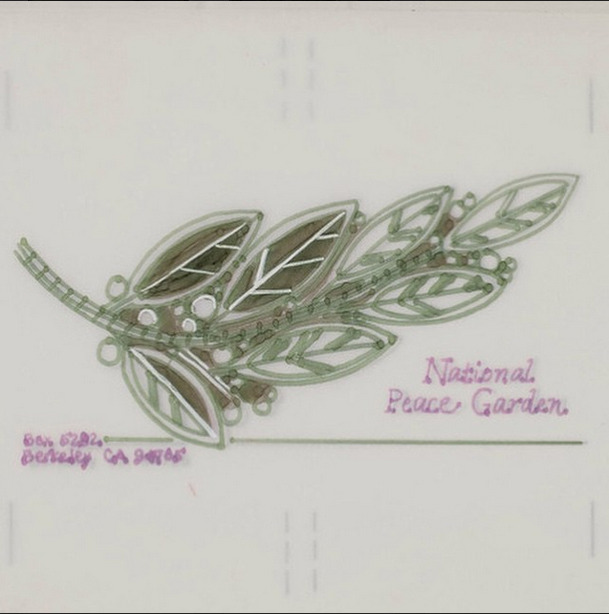
In 1985, Elizabeth Ratcliff, a former English teacher from California, proposed a national monument to peace. The monument was approved by Congress within two years and Hains Point was selected as the site. The Peace Garden Project Committee, led by Garret Eckbo, held a design competition in 1989 and selected Eduardo Catalano’s olive branch plan. Catalano's plan was approved by two planning Committees but rejected by the US Fine Arts Commission in 1992. The design firm Royston Hanamoto Alley & Abey was then hired and a year later their design received full approval. Funding for the monument was not secured by 2003, and the Garden was never built. -
National Liberty Memorial
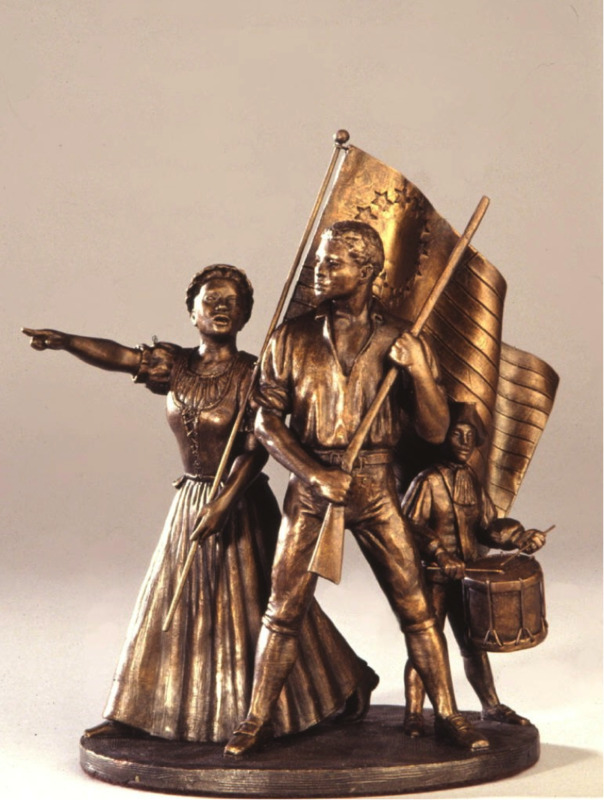
After authorization expired for the Black Revolutionary War Patriots Memorial, Maurice Barboza and Lena Santos Ferguson restarted their campaign to honor African-American service during the Revolutionary War. Congress authorized the National Liberty Memorial in 2013 that will be located at the corner of 14th Street and Independence Avenue near the Department of Agriculture. The Memorial will commemorate African American soldiers, sailors, and civilian volunteers, and also honor enslaved people who escaped or petitioned for their freedom during the war. By 2020, organizers must raise money to design and build the monument. -

Benjamin Banneker Memorial
In 1996, the Washington Interdependence Council began planning a memorial to Benjamin Banneker, an African American scientist and surveyor who helped map the boundaries of the District of Columbia. Congress authorized the plan, and the Council was responsible for raising money for construction. The initial authorization expired in 2005, but the project was renewed in 2010 through new legislative efforts. The memorial is expected to part of a large-scale renovation near L’Enfant Plaza and Banneker Park. The proposed project includes a 14-foot statue, visitors' center, and a large clock tower. -

Black Revolutionary War Patriots Memorial
In 1986, Maurice Barboza and Lena Santos Ferguson won Congressional authorization to honor African Americans who fought in the Revolutionary War with a monument on the Mall. Congress authorized the memorial, but followed precedent by not allocating any funds. Barboza and Ferguson raised enough money to fund a design by Edward Dwight that represented African American men, women, and children emerging from a granite vortex led by black soldiers. Barboza and Ferguson were unable to raise enough money before the authorization expired. The memorial was never built, but they revised their plan in 2005 and proposed the National Liberty Memorial. -

Faithful Slave Mammies of the South Memorial
In 1922, Congress received a proposal from the Washington, DC, chapter of the United Daughters of the Confederacy to create the "Faithful Slave Mammies of the South" memorial recognizing the supposed loyalty of enslaved women to their owners during the Civil War. African American newspapers, including the Chicago Defender condemned the proposal as an insult at a time when Congress was unwilling to pass laws protecting African Americans from lynching. The Senate approved the proposal in 1923, but pressure from citizens and the press prevented passage of the bill in the House, and the memorial was never built. -

American Veterans Disabled for Life Memorial
The first national memorial to specifically honor members of the American armed forces who were permanently disabled during their service opened in 2014. The memorial was proposed to Congress in 1998 by a group led by philanthropist Lois Pope; Jesse Brown, then Secretary of Veterans Affairs; and Art Wilson, National Adjutant of the nonprofit Disabled American Veterans. The memorial was authorized by Congress and signed into law by President Clinton in 2000. The land on which it is built was transferred from the city to the National Park Service for the memorial. It was dedicated on October 4, 2014. -

Draft of the Will of James Smithson
In his will, James Smithson left his estate to his nephew or his nephew's children. In the event that his nephew died without any children, Smithson's fortune was to go to the United States government for "an establishment for the increase and diffusion of knowledge among men" to be founded in the city of Washington. Smithson's nephew died childless in 1835, meaning that Smithson's fortune of approximately $515,000 was given to the US. Congress disagreed over whether the government should accept Smithson's money. After years of debate, Congress accepted the gift and established the Smithsonian Institution in 1846. -

Deaf President Now Protest
On March 11, 1988, deaf students from Gallaudet University in Washington, DC marched to the steps of the Capitol protesting the selection of Elisabeth A. Zinser, a hearing person, as the University's 7th president. Student leaders directed the crowd in a chant that demanded a "Deaf President Now.” Protesters carried a banner that read “We still have a dream!” Faculty, students, and deaf community members attracted national press attention and closed the campus for a week-long protest. Due to the outcry, Zinser resigned and I. King Jordan became the first deaf president of Gallaudet, the world’s only university designed specifically for deaf and hard of hearing students. -

John Stevens Shop
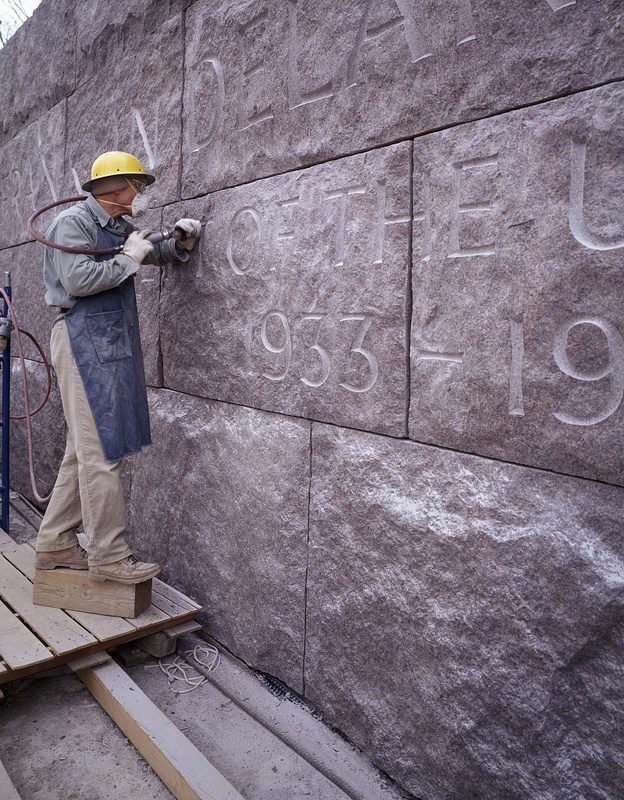
The John Stevens Shop is a stone carving workshop based in Rhode Island and currently co-owned by the father and son team of John E. and Nicholas Benson. They have been involved in the design and execution of lettering for inscriptions for four memorials on the Mall. The Bensons designed and executed special typefaces, or lettering styles, for the Franklin Delano Roosevelt Memorial, the World War II Memorial, and the Martin Luther King Memorial. Additionally, John Benson designed the lettering for the date stones in the Vietnam Veterans' Memorial. -
Carving an inscription at the FDR Memorial
The artist in this photograph is carving one of the many inscriptions found in the Franklin Delano Roosevelt Memorial. Calligrapher and stone carver John Benson, designed the layout and typeface of the inscriptions. Each letter was carved and sandblasted into the granite of the memorial. -

Waffle Vendor on the Mall
Much like the food trucks that line the Mall today, food wagons in the late 1800s catered to office workers and tourists. Here a wagon offering "Hot Waffles 6 for 5c" sits on the Mall near the southside of the Treasury Department building. -

A Picnic on the White House Lawn
During the 1800s the White House was much more accessible than it is today and informal social events were often held at the executive mansion. In this photo, a group is picnicking on the White House grounds with the Treasury Department building visible in the background. Unlike today, this area has the look of a forest with many large trees. Before the McMillan Commission's redesign of the Mall in 1902 the area was a series of meandering paths, gardens, and dense trees. -

Strikes Delay U.S. Memorial to Jefferson
In June 1939, carpenters and laborers working on construction projects throughout Washington went on strike, including many building the Jefferson Memorial. Work on the Memorial and other public projects stopped for nearly 3 weeks due to the strikes. At the end of the strike, workers had successfully bargained for higher wages. -

Builders of the Monument
The Washington Post published an article highlighting the contributions of laborers who built the Washington Monument. The article included an illustration of the individuals profiled and revealed their occupational backgrounds. Some worked on ships and others on railroads before joining the Monument's construction crews. One of the workers highlighted was African American concrete mixer Lewis O'Brien. The images in the center of this illustration represent the entrance to the monument (left), and Superintendent P. H. McLaughlin testing the elevator with some workmen (right). -
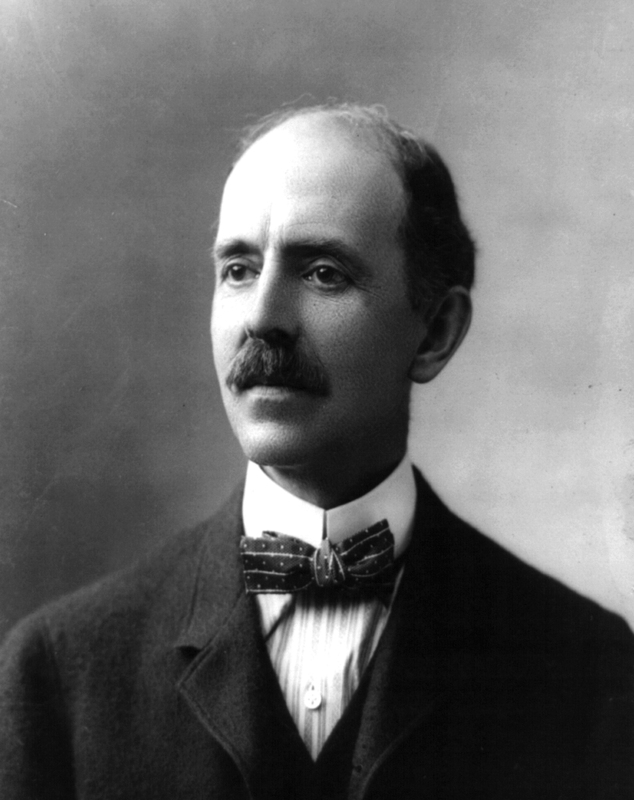
Daniel Chester French
French was a sculptor whose best-known work in Washington, DC, is the statue of President Abraham Lincoln inside the Lincoln Memorial. He also sculpted the statue of Victory which tops the First Division Monument in President’s Park. From 1910-1915, French served as one of the first members of the US Commission for Fine Arts, which reviews new construction in Washington for design and aesthetics. This commission carried on the work of the Senate Park Commission who designed the Mall. One of French’s good friends and mentor, Augustus Saint-Gaudens, was a member of that Commission. -

Black Panther Rally
In June 1970, the Black Panther Party held a rally on the steps of the Lincoln Memorial promoting the proposed "Revolutionary People's Constitutional Convention," to be held that September in Philadelphia. The goal of the Convention was to rewrite the US Constitution to ensure equal rights for oppressed groups, including African Americans, women, and young people. The organizers of the rally chose June 19, or Juneteenth, for its significance as the day in 1865 when enslaved peoples living in Texas were finally freed. Roughly 1,000 people attended the Mall rally. -
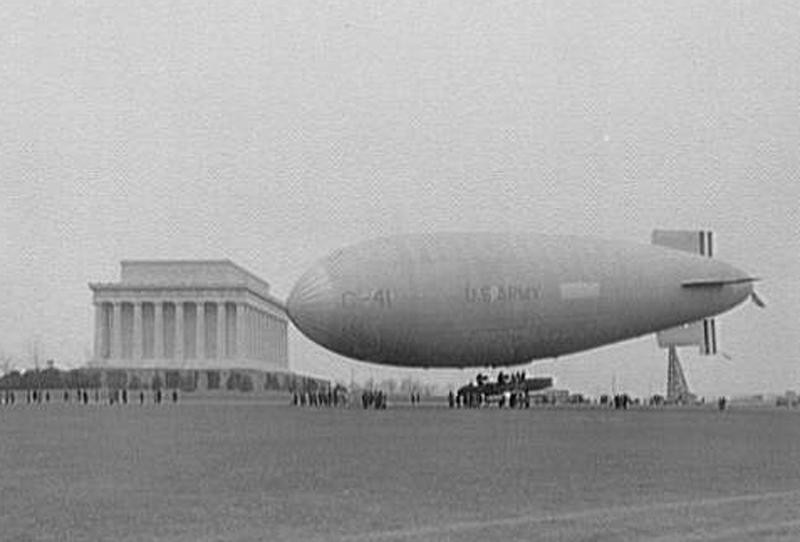
US Army Blimp Lands at Lincoln Memorial
In 1930, the US Army landed an open gondola blimp at the Lincoln Memorial, on a special trip to honor Lincoln's Birthday. Upon landing, the blimp's pilots placed a wreath at the Memorial. US Army blimps occasionally flew over Washington during practices flights from Langley Field in Virginia, but blimps rarely landed on the Mall. -

Turning the Ground Near the Lincoln Memorial
In the 1920s, the land on the western end of the Mall was transformed from a field into the planned landscape surrounding the newly-built Lincoln Memorial, designed by architect James Greenleaf. In this photo, a two-person team tills the land near the Memorial with a horse-drawn tractor to prepare the grounds for planting. -

Maintaining the Monuments
The National Park Service employs many special maintenance teams to keep the Mall beautiful. Their role is to preserve the monuments and maintain the landscapes. Landscapers care for the grounds and remove 3-4 tons of trash daily. A special crew preserves the monuments and memorials. In this photo one such worker cleans the Lincoln Memorial. -

Mall Turf
Foot traffic from 25 million annual visitors is hard on the Mall’s natural resources. In 2017, the National Park Service completed a restoration project that re-engineered a total of 18 acres of turf between 3rd and 14th Streets to ensure preservation and access. The project included the installation of accessible granite curbs and compaction resistant soil. A new irrigation system was developed by installing drains and large underground cisterns to collect storm water which will be used to water the grass. A Turf Manager was hired to maintain the project, the first position of its kind in the National Park Service. -

Arborists on the Mall
The National Park Service employs a team of professional arborists to ensure the continued health of the Mall's 9,000 trees. Sometimes known as "tree doctors," the arborists care for the cherry trees along the Tidal Basin, which have been a fixture on the Mall since 1912. Without their hard work, the centerpieces of the annual Cherry Blossom Festival might not exist. The Mall’s trees are beautiful, but they also serve another important function: removing air and water pollutants from the city and Chesapeake Bay watershed. -

Tidal Basin Paddle Boats
The paddle boats on the Tidal Basin have been a popular activity for the city’s residents and tourists since the late 1930s. Today, the boats provide visitors with unique views of the Thomas Jefferson, Franklin Delano Roosevelt, and Martin Luther King Jr. memorials. Available March through October, the boats are especially popular during the Cherry Blossom Festival when the Tidal Basin’s beautiful cherry blossom trees are in full bloom. -

Anthony LaManna's chisel
Anthony LaManna was a stone cutter who immigrated from Italy to the US through Ellis Island in 1904. He worked on the Lincoln Memorial in the late 1910s and early 1920s carving the words of the Gettysburg Address on the south interior wall. This chisel, along with other tools he used while carving that inscription, are now on display in the lower level of the memorial. Six years after he finished working on the Lincoln Memorial, LaManna passed the bar exam and spent the rest of his life working as a lawyer. -

Allosaurus Arrives on the Mall
In April 1987 a one-ton fiberglass Allosaurus sculpture was moved into the National Museum of Natural History. A crowd formed on the Mall at the steps of the museum to watch the dinosaur lifted into the building with a winch. The 20-foot-long model was featured in the "Dinosaurs, Past and Present," a temporary exhibit displaying artistic representations of dinosaurs constructed in the 1800 and 1900s. After three months, the Allosaurus and other works traveled to museums across North America. -

Spitfire Airplane Arrives at the Air and Space Museum
Before the National Air and Space Museum opened in July 1975, objects like this WWII-era "Spitfire" airplane arrived. To get the plane inside the museum, its wings were temporarily removed and it was led through the museum's west end windows. These windows were designed to open in such a way that large objects, such as aircraft and missiles, could easily move in and out of the museum. -

Steam Locomotive Installation at the National Museum of American History
The American Locomotive Company of Richmond, Virginia built this 280-ton passenger stream train in 1926 which arrived at the National Museum of History and Technology (now the National Museum of American History) to go on permanent display in the Railroad Hall. The retired rail car entered the museum during the original construction, on custom-built train tracks that led directly into the building. Once inside, the exterior museum walls could be completed. -

Statue of George Washington moving across the Mall
Horatio Greenough's 1841 sculpture of George Washington has lived in 4 different locations on the Mall. Originally built for the US Capitol Rotunda, Congress did not like the statue and moved it outside to the east lawn 1 year later. Still unhappy with the statue, Congress transferred it to the Smithsonian for display at the "Castle" in 1908. It remained there until 1962, when Smithsonian staff moved the statue by crane across the Mall to the new National Museum of History and Technology. Staff had to remove a glass window and several bricks in the Castle to move the statue out of the building, because it was too large to fit through the doors. -

Olmec Head
In 1978, the National Museum of Natural History hosted "Treasures of Mexico: From the Mexican National Museum" that featured this large stone Olmec head. The Olmecs lived in south-central Mexico from approximately 1400 BC to 400 BC and are considered Mexico's earliest prominent civilization. The head weighed 5 tons and required a special steel-frame platform to display it safely inside the museum. In this photograph, riggers are unloading the head at the Mall entrance of the Museum. -

Philip Reed
Philip Reed was an enslaved man who worked in the foundry operated by his owner, Clark Mills. The foundry cast the statues of Andrew Jackson in Lafayette Square and the statue of "Freedom" which tops the Capitol dome. The plaster cast for "Freedom" was designed in Italy by artist Thomas Crawford, and shipped to the Capitol. When time came to move the plaster model to the Mills foundry to finish the sculpture, Reed cleverly devised a way to safely separate the five pieces for transportation. As an eslaved person, Reed could receive pay directly for work he did on Sundays. Records show he worked 33 Sundays in 1860-61 on "Freedom." -
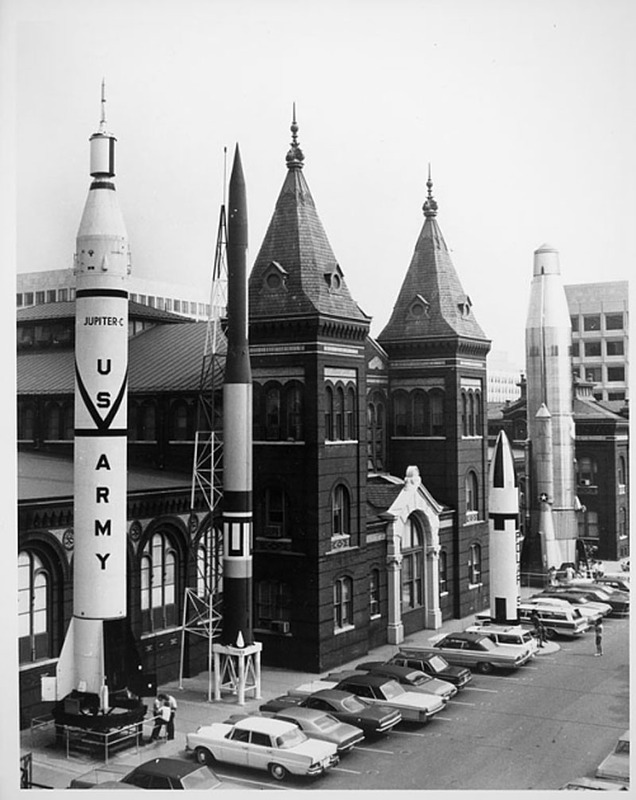
Rocket Row
Visitors to the Mall during the 1950s-1970s may have encountered large rockets that lined the west side of the Smithsonian Arts and Industries building. Called "Rocket Row," this outdoor exhibit accommodated large objects before the National Air and Space Museum opened. This photo from the 1960s shows, from left to right, a Jupiter C, Vanguard, Polaris, and Atlas missile. The Jupiter C and the Vanguard were moved to the National Air and Space Museum, where they are still on view today. -

Tennis Courts in the South Yard
From 1915 to 1935, there was a tennis court behind the Smithsonian Institution Castle, next to the Smithsonian Astrophysical Observatory in the South Yard. The court was created for the Smithsonian's tennis team, which played in intramural as well as inter-departmental matches against teams from other federal agencies. This image shows Loyal B. Aldrich (Smithsonian Astrophysical Observatory employee), and Astrophysicist Charles Greeley Abbot (Fifth Secretary of the Smithsonian) playing tennis. -
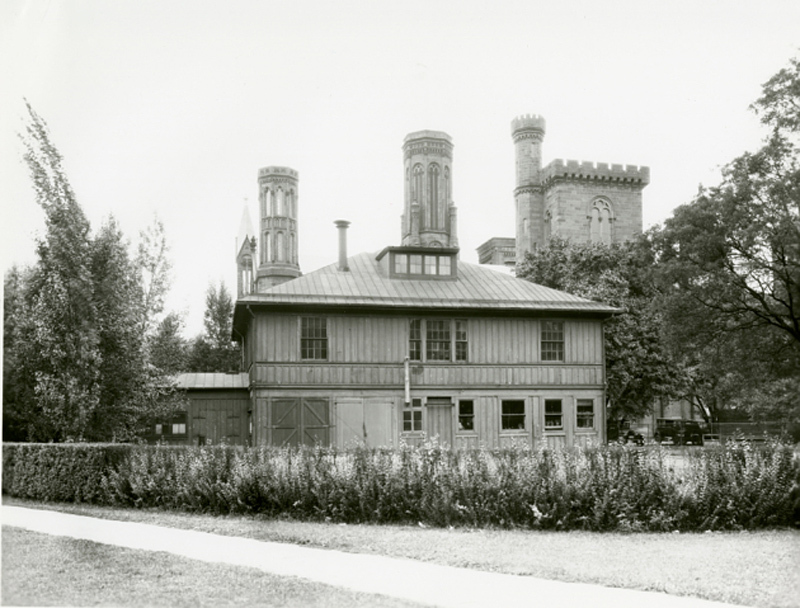
Smithsonian South Shed
The South Shed, also called the Annex, was used to prepare specimen for exhibition. Built in 1898 and demolished in 1975 to make way for the Victorian Garden, the South Shed at various times housed the Smithsonian's model and taxidermy shop, the bug house, and astrophysicist Samuel P. Landley's Aerodrome shop. -
Japanese Lantern
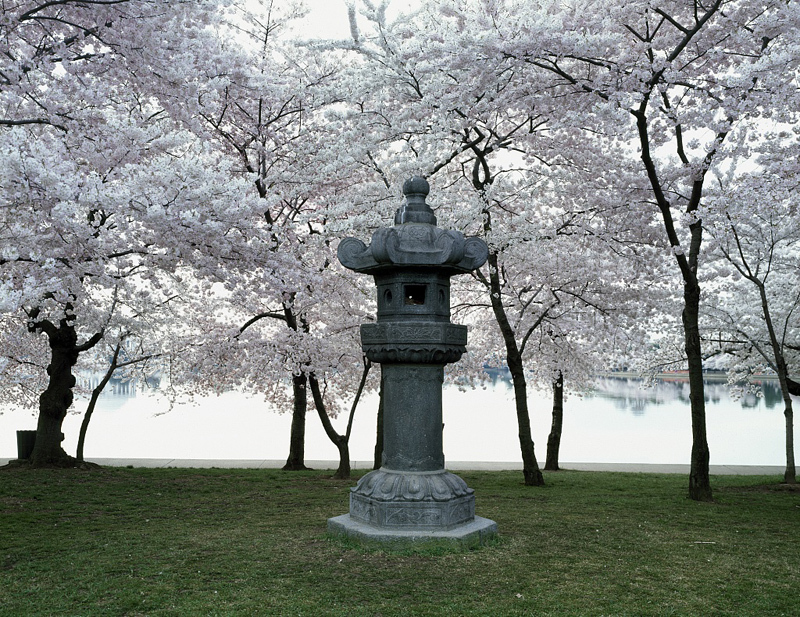
The lantern was given to the people of the United States by the Governor of Tokyo in 1954 to mark the 100th anniversary of Commodore Matthew Perry's arrival in Japan and the opening of trade between the two countries. It was installed amid the first cherry trees planted along the Tidal Basin. The lantern is lighted during the annual Cherry Blossom Festival. It is one of two lanterns created in 1651 to mark the death of a warlord named Tokugama Iemitsu. Both lanterns were formerly located at a temple in Tokyo's Ueno Park, where the twin remains today. -

Early Cherry Blossom Festival
As soon as the Japanese cherry trees were planted, Washingtonians and tourists enjoyed the blossoms every spring. Although there were cherry blossom fetes in the 1920s, they were mostly held in Hains Point. The first Cherry Blossom Festival, which was intended to be the start of an annual tradition, took place in the spring of 1934. First Lady Eleanor Roosevelt and a delegation from the Japanese embassy led the sunrise ceremony that opened the event. The Festival included a parade, a ball, fireworks, and a performance of the Mikado, an English operetta set in Japan, at the Sylvan Theatre. -

Discovery of America
In 1837, the President and Congress commissioned Italian-born artist Luigi Persico to create a sculpture depicting Christopher Columbus to be one of a pair of artworks flanking the staircase on the eastern entrance to the Capitol. When it was installed in 1844, some politicians and art critics applauded it as a representation of Manifest Destiny. In 1958, Discovery of America and its companion piece The Rescue were removed in preparation for renovations to the east facade of the Capitol. By that point, both American Indian advocacy groups and members of Congress were highly critical of the sculpture. It was not reinstalled when the renovation was completed. -

American Colonization Society Hall
The American Colonization Society was a national organization founded in 1817. Its purpose was to encourage the migration of free African Americans and formerly enslaved Africans to Africa. Members of the Society saw this plan both as a way to encourage slave owners to free their slaves and to give free black Americans a way to escape the inequality they experienced in the US. The Society was responsible for sending 6,000 black Americans to Liberia between 1821 and 1867. The organization had a permanent office on the Mall from 1860 until the building was razed in 1930. -
Disability Rights Protests at the Capitol
In March 1990, disability rights activists gathered at the west front of the Capitol to pressure the House of Representatives to pass a disability rights bill. The bill passed in the Senate the year before, but it stalled in the House. Nearly 1,000 people attended the rally. To protest the lack of accessibility inside the building, 60 people discarded their mobility devices and crawled up the 83 stone steps to the Capitol. Some Congressmen responded negatively to the protest, but it was successful: President George H. Bush signed the Americans with Disabilities Act into law on July 26, 1990. -

Federal Government Building
One of the first office buildings in Washington, this building initially housed the Departments of State, War, and the Navy, as well as the Patent Office, the General and City Post Offices, and the offices of the Superintendent and Surveyor of the City. By 1814, only the Departments of State, War, and the Navy remained, but they were temporarily relocated when the building was damaged by British forces during the War of 1812. In 1816, all three departments returned to a renovated office building, although the Department of State moved in 1819. The Department of the Navy continued to occupy the building until it was demolished in 1884. -

United States Slave Trade
While not an exact image of the Mall, this abolitionist print shows the role of the federal city in the interstate slave trade in the early 1800s. Slaves worked, lived, were held captive, and sold within sight of the Capitol building. In this print, the dome of the Capitol is visible above the head of a woman who, with her children, is being forced onto a slave ship, possibly sold to the deep south where working conditions were often very harsh, even deadly. -
Essay on the City of Washington
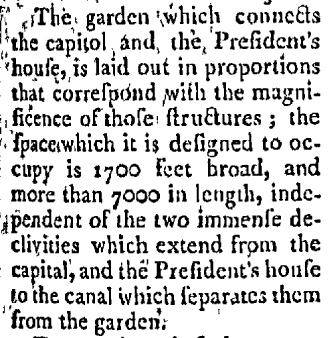
This newspaper article was published in New York City in the mid 1790s, describing official plans for the developing federal city. Although an Act of Congress in 1790 had declared that Washington would be the national capital as of 1800, it was at the time mostly farmland and a few groups of buildings. The author describes the Mall as a magnificent setting, and the park to be developed there as elegant as any in Europe. -

Washington Monument, canal, and baseball grounds
This illustration accompanied an article discussing efforts to restart construction on the Washington Monument, with hopes to complete the monument by the national centennial in 1876. The point of view of the illustration is from the Mall's baseball grounds, now the White House Ellipse. In between the baseball grounds and the monument is the Washington Canal, with sailboats and barges in it, possibly carrying goods to market in the city. The people in the illustration include wealthy white men as well as black and white laborers. -

John McShain
John McShain was a building contractor in charge of the construction of many federal buildings in Washington during the 1900s. On the Mall, he was responsible for building the Jefferson Memorial and was trusted with remodeling the White House during Harry Truman's presidency. During his heyday as a builder, a common saying was that L'Enfant may have designed Washington, DC, but McShain was the man who built it. McShain's great volume of work led one radio broadcaster to quip in 1949 that signs in the city should be changed to "Welcome to Washington - John McShain, Builder." -

Rally to Restore Sanity and/or Fear
On October 30, 2010, Jon Stewart and Stephen Colbert led a rally on the National Mall. The event was a combination of Stewart’s “Rally to Restore Sanity” and Colbert’s “March to Keep Fear Alive”. The event drew 215,000 people and was thought to be a satire or spoof of events such as Glen Beck’s “Restoring Honor” rally. The satirical nature of the rally was a symbol of the normalization of protest on the Mall. -
March for Immigration Reform
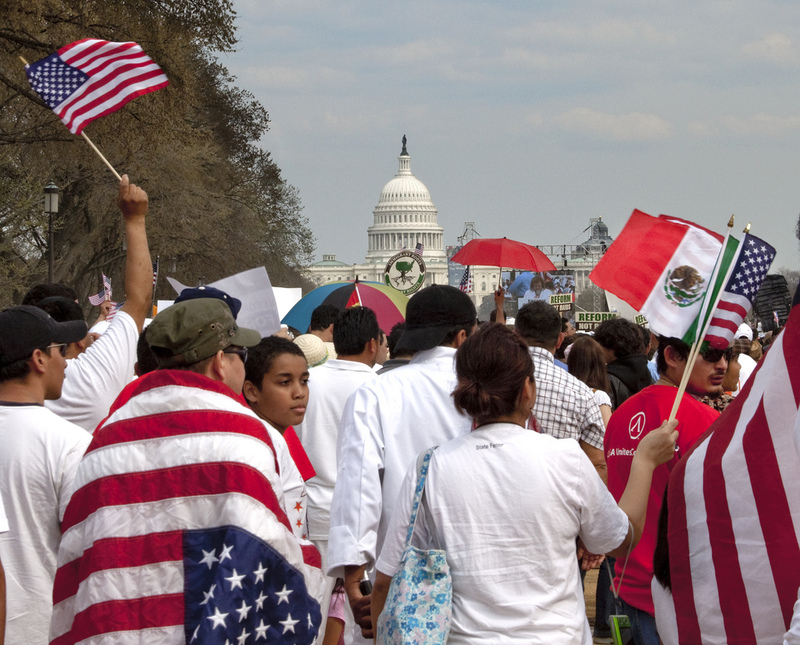
In March 2010, as Congress was finalizing the Affordable Care Act, immigrants and activists took to the National Mall to call for immigration reform. Participants urged President Obama to keep his campaign promise of comprehensive immigration reform and chanted “Yes we can,” his campaign slogan, in both English and Spanish. President Obama addressed the crowd through a recorded message and promised to continue to work with Congress to pass an immigration bill. -

National Powwows
The National Powwows began in September 2002. They were organized by the Smithsonian’s National Museum of the American Indian in anticipation of the opening of the museum. The events were attended by thousands from the US and Canada to celebrate American Indian culture through dancing, music, food, clothing, and events. Hundreds of tribes participated in a dance competition at the powwow, where members of the tribe wore traditional clothing. Subsequent powwows were held in 2005 and 2007. -
First Annual Smithsonian Kite Festival
The First Annual Smithsonian Kite Carnival (later referred to as the Kite Festival) took place on the National Mall on March 25, 1967. Individuals could compete in contests with homemade kites as well as ready-made ones. The festival also included kite-making workshops led by National Air and Space Museum curator Paul E. Garber, a lecture series, and a special display of kites made by Garber and his wife. The event was sponsored by the Smithsonian Institution for the first 44 years and became a part of the National Cherry Blossom Festival in 2010. -
America's Millennium Gala
America’s Millennium Gala was the culminating event of a larger three-day project celebrating the millennium. The event was produced by Quincy Jones and George Stevens Jr., hosted by Will Smith, and premiered a film by Steven Spielberg. Festivities began at 9pm on December 31st, 1999 and continued until 1am. Leading up to midnight, the western half of the Mall, between the Washington Monument and the Lincoln Memorial, featured a number of appearances and performances by popular musicians, as well as literary and scientific figures. The evening concluded with an extensive fireworks and lights display over the Washington Monument. -
Old and New Agriculture Buildings
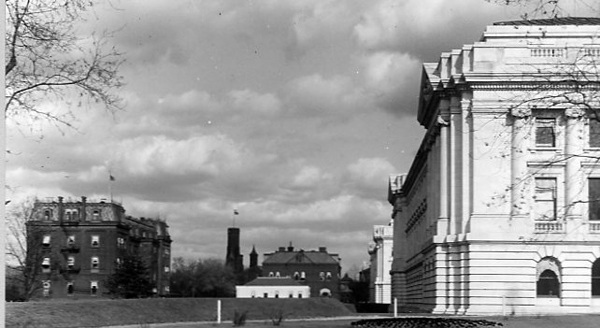
The Department of Agriculture's first building on the Mall was completed in 1868, but by the 1890s, the Department was outgrowing its building. In 1901, as part of the McMillan Plan to redesign the National Mall, Congress approved a new office building for the Department, to be built directly behind the first, with the intention that the newer building would replace the original. This photo from the late 1920s shows the old (on the left) and the new (on the right) buildings, with the Smithsonian Castle visible between the two. The old building was demolished in 1930. -
Smithsonian Astrophysical Observatory
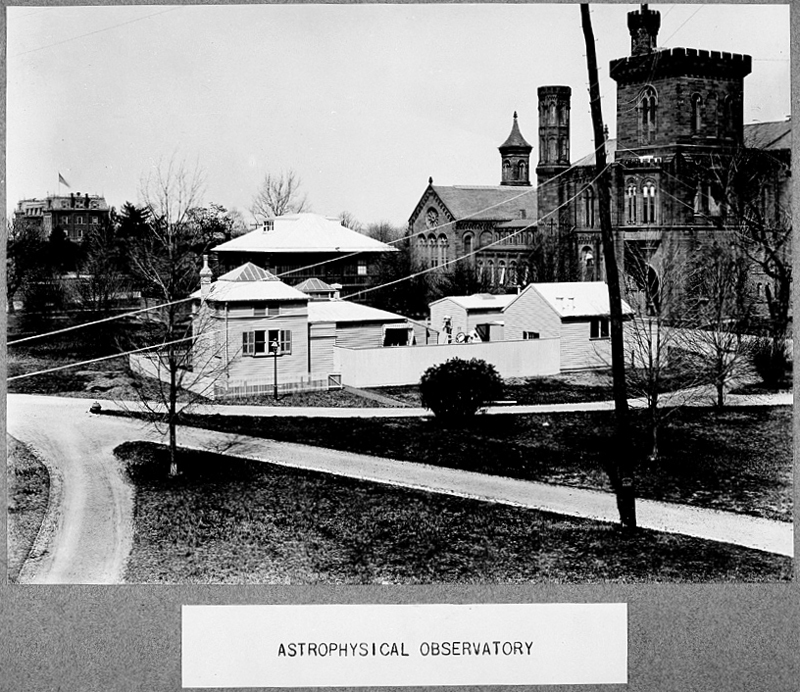
This observatory was established in March 1890 and was one of the first to practice astrophysics. It was housed in buildings in the South Yard of the Smithsonian Institution Building's grounds. Early research conducted on the site focused on solar radiation. In the 1950s, the Smithsonian Institution created a partnership with Harvard University and the Astrophysical Observatory headquarters moved to Cambridge, Massachusetts. -
George Washington to Daniel Carroll of Duddington
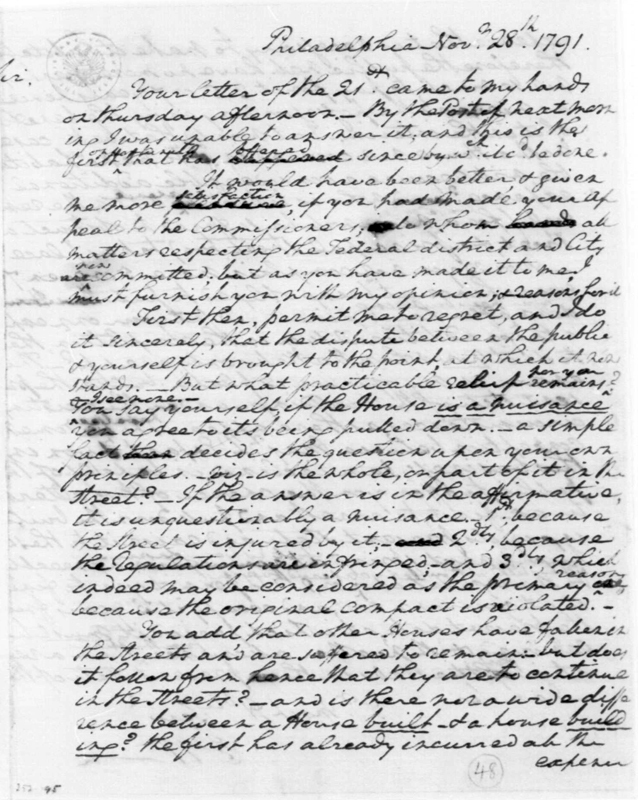
In 1791, Daniel Carroll of Duddington, a District resident, was in the middle of an argument with Pierre Charles L'Enfant, city planner for the new capital. Carroll had built a house where L'Enfant wanted a road, but Carroll was reluctant to have it torn down. Washington wrote to convince Carroll to move the house, at federal expense. What Washington did not know was that L'Enfant had already torn down Carroll's house a few days before. -

Lincoln Memorial Commission Report
In 1911 Congress appropriated funds and established a subcommittee within the Commission of Fine Arts to write a proposal for a memorial to President Abraham Lincoln. The committee undertook a national design competition for monument proposals. Their report, seen here, selected a design by architect Henry Bacon to create the Lincoln Memorial towards the end of the Mall in Potomac Park. -

Henry Bacon's design for the Lincoln Memorial
In 1912 this design by Henry Bacon was selected as the winner of a national design competition for the Lincoln Memorial. His design was in the neoclassical style, inspired by the temples of Greece. The design also featured a 19 foot statue of Lincoln, designed by sculptor Daniel Chester French, and murals, painted by artist Jules Guerin. Construction for the monument began in 1914 and was completed in 1922. -

John Russell Pope's Mayan Temple design for the Lincoln Memorial
In 1912 John Russell Pope submitted several entries to the design competition for the Lincoln Memorial. They were each unique. This proposal was for a Mayan Temple style monument to Lincoln which featured a large flame burning at the top of the memorial. -
John Russell Pope's design for the Lincoln Memorial, #1
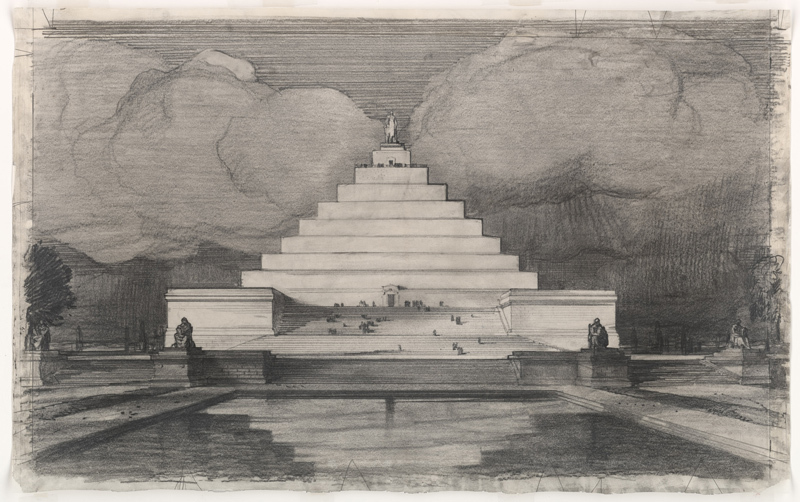
In 1912 John Russell Pope submitted several entries to the design competition for the Lincoln Memorial. They were each distinct from one another. This submission was a unique pyramid design. Known as the Ziggurat Style, this style features middle eastern inspired stepped pyramids. -

Clark Mills's Design for a Lincoln Monument
In 1867, Congress formed the Lincoln Monument Association to commission a memorial for the late president. They chose this design by sculptor Clark Mills. Mills was known in Washington for designing a statue of Andrew Jackson that stands near the White House. Mills's Lincoln monument featured multiple tiers and 36 bronze statues depicting scenes related to war, justice, and liberty. Rising above the war and politics rested a statue of Lincoln, seated, writing the Emancipation Proclamation. Mills's monument was never built, because financial problems and political disputes plagued the project from its earliest days. -

City of Washington from beyond the Navy Yard
This painting from 1833 was published in New York City in 1834. It shows a view of Washington, DC from Anacostia. The Navy Yard and the Capitol can be seen in the center, while the Arsenal and the White House can be seen toward the left. The ships and ox carts help to show a city on the move, with a growing economy. The large amounts of open space and the rural nature of Anacostia show how 30 years after the federal government relocated to Washington the area was growing slowly into a city. -

Annex Building of the Bureau of Engraving and Printing
The original Bureau of Engraving and Printing was opened on July 1, 1880, but by the 1930s, the facility had become too small for all of the Bureau's responsibilities, which included printing money, stamps, and government security documents. In 1938, a new facility was opened across the street from the original building. Beneath the building are two tunnels, one walkway connecting to the main building and one set of railroad tracks connecting to a freight-receiving building. The tracks are no longer in use. -
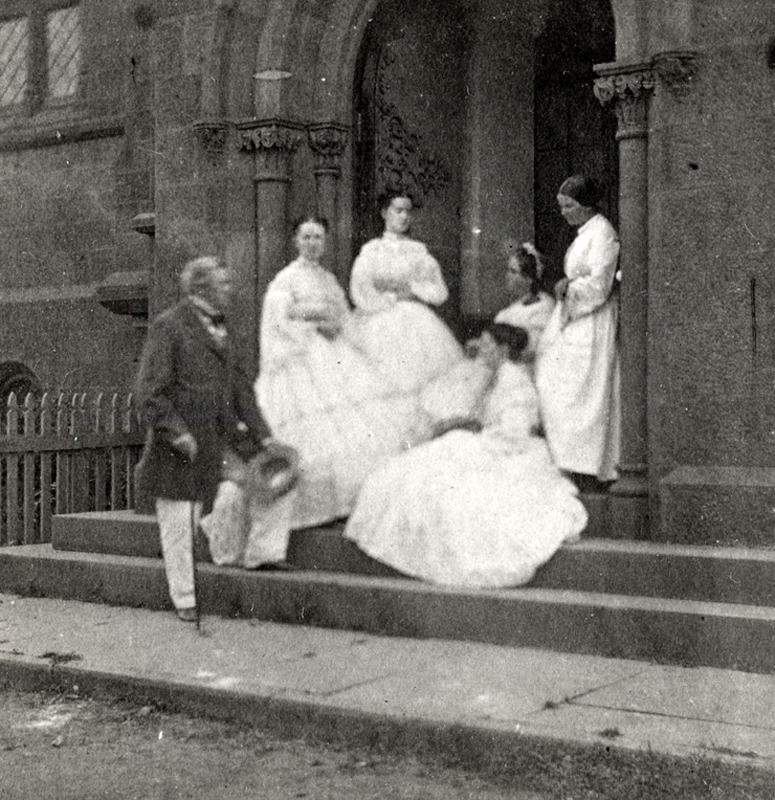
Henry family at east door of Castle
Joseph Henry, the first secretary of the Smithsonian, and his family lived in the Smithsonian Institution Building, also called the Castle, from 1855 to 1878. This photograph, taken in 1862, shows Mr. Henry along with the whole family: Harriet Alexander Henry, his wife, and daughters Caroline, Mary, and Helen. The fourth woman may be a relative or family friend. -

Hapgood's design for the Washington Monument
In 1877 Congress appropriated funds so that the building of the Washington Monument could continue. Budget problems had halted construction in 1854. But after sitting untouched for more than 20 years many worried that a new design was needed for the monument. Congress quietly accepted new proposals. One such design was this Gothic tower by Boston architectural student H.P. Hapgood. Ultimately no new designs were accepted and instead the Washington Monument was completed using only the central obelisk portion of Mills' original design. -

Latrobe's design for the Washington Monument
In 1799 Architect Benjamin Henry Latrobe submitted this proposal for the Washington Monument. The design was meant to be incorporated into the original design of Washington, DC, but budget problems prevented its construction. The plan included the pyramid monument you see here, a terrace, and murals with allegorical figures covering the ceiling inside the monument. -

Flood of 1889
On June 2, 1889, heavy rains caused massive flooding in Johnstown, Pennsylvania, and overwhelmed the South Fork Dam. The storm also hit the Washington, DC, area. As a result, the Potomac River flooded and areas around Pennsylvania Avenue were under several feet of water. The flooding was made worse by sewers that became clogged with dirt from unpaved roads and began overflowing, causing the water to rise. The only access between the east and west of the city was by boat. -

Washington Monument repair and theft of lightning rod points
During the fall and winter months of 1934, the Washington Monument was prepped for repairs and cleaning, due to cracking at the base. Scaffolding was built around the 550-foot monument to allow the workers to make the repairs with Public Works Administration funding. The restoration lasted 140 days, during which time the Monument remained open to visitors. However, on December 28th, 1934, someone scaled the scaffolding to remove 107 of the 170 gold-plated, platinum-tipped lightning rod points from the top of the monument. The points were valued at $8 each, which totaled $856. -

Reflecting Pool reconstructed
Restoration of the Lincoln Memorial Reflecting Pool began in November 2010. The two-year, $30.7 million renovation project almost completely rebuilt the structure. The 1923 original pool was built on an unstable foundation that sank and cracked. The overhauled pool is shallower, reinforced with over 2,000 pilings driven to the underlying bedrock, and a gray tint was added to increase the pool’s reflectivity. The water supply system was replaced, and instead of stagnant water, the supply is now circulated from the nearby Tidal Basin. Gravel sidewalks bordering the pool were also replaced with pavement to prevent erosion. -
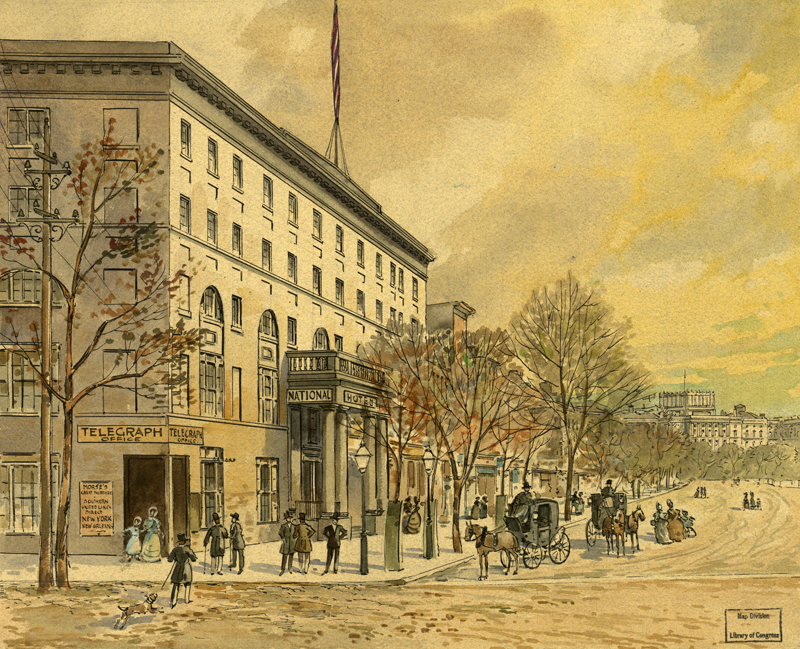
View down Pennsylvania Avenue
This view down Pennsylvania Avenue NW from the corner of 6th Street shows part of Washington near the Mall around 1860. On the corner in the foreground, where the Newseum is today, stood the National Hotel, one of the most prominent hotels in the city. It also housed a telegraph office, advertising "Morse's Great Northern & Southern United Lines" with direct communication to to New York and New Orleans. Businesses line the north (left) side of the street, and to the south was one block of commercial and residential buildings which stood where the National Gallery of Art is today. -

Brown's Indian Queen Hotel
There was a hotel on this part of Pennsylvania Avenue starting in 1805. In 1820 the business was bought by Jesse Brown in 1820 and the place was renamed Brown's Indian Queen Hotel. The hotel was popular with out of town visitors and congressmen alike. This lithograph from the 1830s describes it as "midway between the Capitol and the President's House." In 1856 the hotel was renamed the Metropolitan, and remained open under this name until 1932. -

Original Department of Agriculture Building
The original building which housed the Department of Agriculture was designed in 1867 by Adolf Cluss, the same architect who designed the Smithsonian Arts and Industry Building. For decades, this building housed offices, research laboratories, and even a small museum. The building was razed in 1930 to fulfill the McMillan Commission's plan for the National Mall. -
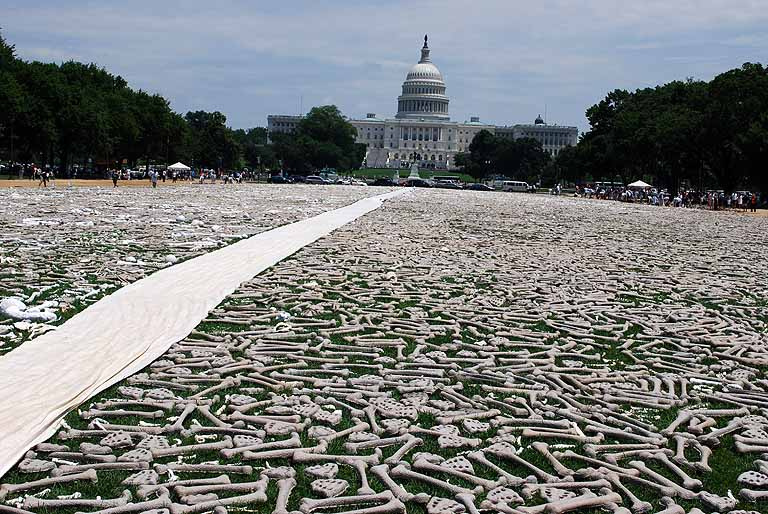
One Million Bones
The Art of Revolution, a group who uses symbolic events to spark political action and social change, staged the "One Million Bones" exhibit on the National Mall June 8-10, 2013. This event laid out one million handcrafted "bones" on the central green space of the Mall. These bones were created by students, educators, artists, and volunteers from across the country. The event was a call to action against genocide in such places as Sudan, South Sudan, the Democratic Republic of Congo, Burma, Somalia, and Syria. -

Latino Festival
The DC Latino Festival first began in 1970 as a neighborhood celebration of the diverse Latino community within Washington. Growing each year, the Festival moved to the Mall in 1989 and has also been held on Pennsylvania Avenue. Today the festival, also called "Fiesta DC," is a large event featuring a parade and pavilions for arts and crafts, education, food, and embassy representatives. -

The National Black Family Reunion
The National Black Family Reunion is a cultural event held annually on the Mall. Sponsored by the National Council of Negro Women (NCNW), the event celebrates black community, church, and family values. It was first established by Dr. Dorothy I. Height, former chair of the NCNW and longtime activist, to combat negative stereotypes about the African American family. The event features food, entertainment, education, and cultural activities. -

Hains Point Teahouse
The first teahouse in Hains Point, the southernmost tip of East Potomac Park, was a refreshment stand opened in 1920 and run by local Girl Scouts. It was very popular, and in 1922 construction began on a permanent structure with restrooms, which opened in 1924. Both the stand and building served light refreshments to park visitors. In 1925, park authorities transferred operation of the tearoom from the Girl Scouts to the Welfare and Recreation Association of Public Buildings and Grounds. By 1969, business had slowed significantly. The teahouse closed in 1985 and was demolished in 1987. -

Founding of the Society for a More Beautiful National Capital
First Lady Lady Bird Johnson was a conservationist and lover of nature. She believed that the environment could help shape people's lives by improving their health and attitudes. In 1964, she established the Society for a More Beautiful National Capital to improve neighborhoods and tourist attractions in Washington, DC. Her projects centered around trash cleanup, building renovation, and planting flowers. She hoped that Washington would become an example to the rest of the cities of the country for the power of beautification. -

White House construction
When President Truman moved in in 1945, the White House was showing its age. Burned by British troops in 1814, renovated in 1902 and 1927, and expanded several times, the piecemeal and constantly incomplete renovations to the White House had left the building structurally unsound. Beginning in 1949, Truman and his family moved into the Blair House across the street so that the White House could be entirely gutted. New foundations, wiring, plumbing, duct work, and other utilities were added. Designers had intended to reuse historic wall paneling but it was not practical, so reproductions were used instead. -

Admiral Nimitz Parade
In October 1945, World War II Fleet Admiral Chester W. Nimitz was honored with a parade in Washington, DC, before being presented with a Gold Star by President Truman for his service as the Commander in Chief of the US Pacific Fleet and Pacific Ocean areas from 1944 to 1945. Nimitz had represented the United States at the formal surrender of Japan in September 1945. Thousands of sailors, Marines, and women from WAVES units marched in his honor. A large replica of the USS Missouri, site of the Japanese surrender, served as the parade's grandstand at the base of the Washington Monument. -

Eric Carlson
World War I US Army veteran Eric Carlson joined the 1932 Bonus March to seek early payment of pension money promised veterans by the government. He was shot during a confrontation between marchers and DC police, who were trying to evict the marchers from their campsites. Another marcher, William Hushka was also shot and died instantly; Carlson died from his wounds within a week of being shot, on the same day that Hushka was buried with military honors at Arlington National Cemetery. Carlson was also buried at Arlington. -

Native Landscape at the National Museum of the American Indian
The grounds surrounding the National Museum of the American Indian are an extension of the exhibit space within. Representing what local Chesapeake Bay landscapes would have been like before European contact, the space pays tribute to indigenous social and spiritual land use patterns. The landscape includes features such as a hardwood forest, wetlands, meadows, Grandfather Rocks, and traditional croplands. More than 33,000 plants of approximately 150 species can be found throughout the landscape. There are also performances for visitors at the outdoor amphitheater and fire pit. -

Floral Library
Also known as the Tulip Library, the Floral Library was established in 1969 as part of Lady Bird Johnson's Capital Beautification Project. The 'library' has 93 flower beds maintained by the National Park Service. These beds feature either tulips or annuals depending on the planting season. The flowers require up to 10,000 bulbs to be planted by hand each year. -
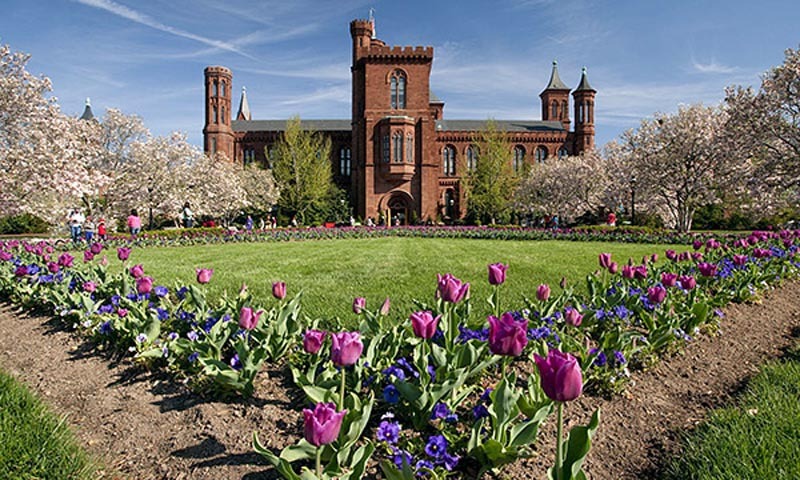
Enid Haupt Garden
The Enid Haupt Garden was created in the 1980s as part of a redesign of the area around the Smithsonian Castle. It sits to the south of the Castle and above the underground galleries and offices of the National Museum of African Art, Arthur M. Sackler Gallery, and S. Dillon Ripley Center. The garden is named for publisher and horticultural philanthropist Enid A. Haupt. The design of the garden is a modern take on American gardens from the mid-to-late 1800s.