People
Item set
Items
-

Jose de Rivera
When the architect of the National Museum of History and Technology wanted an outdoor sculpture designed for the new museum opening in the mid-1960s, he recommended artist Jose de Rivera. Rivera was an established sculptor known for his abstract forms, kinetic elements, and experience designing for public spaces. de Rivera created, "Infinity," which stands on the Mall side of the building now called the National Museum of American History. In 1997, following de Rivera's death, his son donated some of the tools used to create "Infinity" for the museum's collections. -

Philip Reed
Philip Reed was an enslaved man who worked in the foundry operated by his owner, Clark Mills. The foundry cast the statues of Andrew Jackson in Lafayette Square and the statue of "Freedom" which tops the Capitol dome. The plaster cast for "Freedom" was designed in Italy by artist Thomas Crawford, and shipped to the Capitol. When time came to move the plaster model to the Mills foundry to finish the sculpture, Reed cleverly devised a way to safely separate the five pieces for transportation. As an eslaved person, Reed could receive pay directly for work he did on Sundays. Records show he worked 33 Sundays in 1860-61 on "Freedom." -

John McShain
John McShain was a building contractor in charge of the construction of many federal buildings in Washington during the 1900s. On the Mall, he was responsible for building the Jefferson Memorial and was trusted with remodeling the White House during Harry Truman's presidency. During his heyday as a builder, a common saying was that L'Enfant may have designed Washington, DC, but McShain was the man who built it. McShain's great volume of work led one radio broadcaster to quip in 1949 that signs in the city should be changed to "Welcome to Washington - John McShain, Builder." -

Eric Carlson
World War I US Army veteran Eric Carlson joined the 1932 Bonus March to seek early payment of pension money promised veterans by the government. He was shot during a confrontation between marchers and DC police, who were trying to evict the marchers from their campsites. Another marcher, William Hushka was also shot and died instantly; Carlson died from his wounds within a week of being shot, on the same day that Hushka was buried with military honors at Arlington National Cemetery. Carlson was also buried at Arlington. -

Charles Guiteau
Charles Guiteau shot President Garfield on July 2, 1881 at the Baltimore and Potomac Railroad Station on the National Mall. Guiteau shot Garfield because he had been denied a political appointment that he believed he deserved. Garfield eventually died from complications from the gunshot wound. Guiteau was tried, found guilty, and sentenced to death by hanging on June 30, 1882 at the District of Columbia jail. -

James McGirk
James McGirk was the first person to be executed in the District of Columbia on October 28, 1802. He was found guilty of murdering his wife. At this time, the gallows were located on the Capitol Grounds, between where the Grant and Garfield statues stand today. -

Harold L. Ickes
Harold L. Ickes was the longest serving Secretary of the Interior to date, holding the post for 13 years from 1933 until 1946. He supported civil rights for African Americans, desegregating the Department of the Interior, including the National Parks, during his time in office. He helped facilitate Marian Anderson’s 1939 concert at the Lincoln Memorial on Easter Sunday, arranged after the Daughters of the American Revolution refused to allow the African American opera singer to perform in their segregated concert hall. -

William Hushka
William Hushka, an immigrant from Lithuania, was a World War I US Army veteran who joined the 1932 Bonus Marchers in their campaign to secure early payment of veterans' pensions from the government. Along with fellow veteran and marcher Eric Carlson, Hushka was shot and killed by police as they were trying to evict the Bonus Marchers from their encampment in Washington. He was buried with military honors at Arlington National Cemetery less than a week after being shot. -

Solomon Brown
Solomon Brown was likely the first African American employee at the Smithsonian Institution. He began work there in 1852 as a maintenance worker, building exhibit cabinets, cleaning, and moving specimens. He advanced to serve as clerk to Secretary Spencer Baird, who relied on him to serve as his eyes and ears in the Smithsonian. During the Civil War, Brown kept Baird informed about possible Confederate attacks and the status of work in the Museum. He worked closely with Baird as a naturalist and became an illustrator, lecturer, and philosopher. -

Joseph Henry
Henry was a noted scientist in the United States when he was selected to serve as the first Secretary, or chief executive officer, of the new Smithsonian Institution in 1846. He served for 30 years, developing the new museum as a center for research, publications, and international exchange. During his tenure, the Smithsonian provided important support for scientists by coordinating and funding research, publishing original studies, and facilitating communication among scientists in the United States and abroad. He lived with his family in the Smithsonian Castle until his death in 1878. -

Eleanor Roosevelt
As First Lady, Eleanor Roosevelt championed equal opportunity for all races and for women, often communicating the opinions of civil rights leaders to President Franklin D. Roosevelt and his administration. Roosevelt resigned from Daughters of American Revolution in 1939 when they refused to allow Marian Anderson to sing in Constitution Hall because she was African American; she then helped organize Anderson's concert at the Lincoln Memorial. Roosevelt was also an ally to A. Philip Randolph, particularly in the early 1940s when civil rights leaders were protesting discrimination in the defense industry. Roosevelt encouraged her husband to meet with Randolph and others in 1940, and again in 1941. -

Thomas Jefferson
Thomas Jefferson worked with President George Washington to advocate that the nation's capitol be situated on the banks of the Potomac. His sketch of a layout for the federal city is the oldest known plan of Washington, DC, and he shared his ideas with many of the early planners and architects of the city, including L'Enfant, Hoban, and Latrobe. He was the first president to serve entirely in Washington, DC, and he used the Ellipse and White House grounds for some of his scientific and agricultural experiments during his time in office. -

Charlotte Dupuy
Charlotte Dupuy was an enslaved African American woman owned by Congressman and Secretary of State Henry Clay. Clay, with Dupuy and her family, lived in Lafayette Square, just north of the White House. In 1829, Dupuy sued Clay for her freedom and the freedom of her children. The circuit court decided against Dupuy, and she was forcibly removed to Clay's Kentucky estate. -

Joseph Hooker
General Joseph Hooker commanded the Union Army of the Potomac during the American Civil War. Though he served throughout the war, reaching the rank of Major General, he is most remembered for suffering a major defeat at the Battle of Chancellorsville. Away from the battlefront, General Hooker's division sometimes encamped on the National Mall. After the war, the area near the present day Federal Triangle was referred to as "Hooker's Division," a double-entendre referencing his troops' encampment and rampant prostitution in the neighborhood. -

Isaac Newton
Pennsylvania farmer and dairyman, Isaac Newton served as the first United States Commissioner of Agriculture. Under Newton, the agency focused on research and education, disseminating information to farmers throughout the nation. Newton advocated for daily weather reports being telegraphed nationwide, created an experimental farm on the National Mall, and contributed to the National Botanical Garden's specimen collections. -

Edmonson Sisters
Mary and Emily Edmonson were among the 77 enslaved African Americans who boarded the schooner, Pearl, in 1848 intending to sail down the Potomac, then north to freedom. Captured when the Pearl becalmed, the Edmonson sisters were jailed. They awaited sale as slaves in New Orleans while their father, a freeman, worked to raise money to buy their freedom. Abolitionists, including Harriet Beecher Stowe, heard of their plight and launched a fundraising effort that lead to the sisters' emancipation. The Edmonsons later studied at Oberlin College in Ohio, and became active anti-slavery crusaders. -

Solomon Northup
Solomon Northrup, a free African American from New York, arrived in Washington in 1841 in the company of two white men who had promised him a job as a fiddler. After a day touring the Capitol and White House Grounds, the men drugged him and handed him over to a slave trader. He was imprisoned in Williams' Slave Pen near the Mall, and then sold into slavery for $1,000. He labored for twelve years on a cotton plantation until northern abolitionists, hearing of his plight, obtained his freedom through a series of legal battles in 1853. -

Richard H. Sylvester
Sylvester was the Chief of Police in Washington, DC, during the Woman Suffrage Parade of 1913. The women were harassed by a large crowd of mostly male onlookers. Instead of protecting the marchers, the police failed to intervene and at times joined in on the attacks on the women. Eventually, Sylvester requested help from Secretary of War Henry L. Stimson, who authorized US Army troops on horseback from nearby Fort Myer to help with crowd control. In 1915, formal criminal charges were filed against Sylvester for the incident and he resigned from the police force. -

Cleve Jones
Cleve Jones is a human rights activist who created the idea of a memorial quilt commemorating people who have died of AIDS. The first time the NAMES Project AIDS Memorial Quilt was displayed was October 11, 1987, when it was laid out in full on the National Mall. At that point it had 1,920 panels. At this display, Jones read out the names of his friends who had died, the start of a list of the names of all memorialized by the quilt. The AIDS quilt has returned to the Mall in 1996 and in 2012, although it is now too large to display all at once. -

George Washington
Authorized by The Residence Act of 1790 to select a site along the Potomac to be the home of the new national government, President George Washington was heavily involved in the planning and development of the new federal city. He chose the area which is now Washington, DC, as the site, insisting that its southern boundary include the city of Alexandria, which was a part of the District of Columbia until 1846. In 1791, he appointed Pierre L'Enfant to create a plan for laying out the streets and major buildings. Although L'Enfant technically answered to the Commissioners for the Territory, he sent all of his reports to President Washington. -

W. Richard West Jr.
Richard West was the founding Director of the National Museum of the American Indian, serving from the museum's opening in 2004 until 2007. West is a citizen of the Cheyenne and Arapaho Tribes of Oklahoma and a Peace Chief of the Southern Cheyenne. He has devoted much of his professional and personal life to American Indian cultural, educational, legal, and governmental issues. West supported a broad scope for the museum, representing the wide cultural and ethnic diversities of Native Americans, both through historical collections and exhibits and through living history presentations. -

Spencer Baird
Spencer Baird served as the first curator of the Smithsonian Institution and became the second Secretary of the Smithsonian. He worked at the Institution from 1850 until his death in 1887. Baird expanded and strengthened the Smithsonian's collections, and helped the young museum grow into a prominent research and educational organization. Baird devoted his career to caring for the museum's scientific collections and objects associated with the country's founding fathers. When Congress appropriated funds to create a second museum on the Mall next to the original Smithsonian Castle, Baird became its director. In 1878, he was appointed as Secretary of the Smithsonian. -

James L. Farmer Jr.
James Farmer was one of the leaders of the 1963 March on Washington for Jobs and Freedom. As one of the founders of the Congress on Racial Equality (CORE), an interracial civil rights organization, and its National Director in the early 1960s, Farmer was a major figure in organizing civil rights protests. While he participated in the planning for the March on Washington, Farmer was unable to attend the event because he had been arrested at a protest in Louisiana. But, imprisonment did not prevent him from being heard in Washington: his speech was read by fellow CORE member Floyd McKissick. In the speech, Farmer declared that the fight for racial equality would not end "until the dogs stop biting us in the South and the rats stop biting us in the North." -

Washington National Monument Society
Formed in 1833, the Washington National Monument Society took charge of creating a memorial to George Washington on the National Mall. They raised money through public donations and awarded the design contract to architect Robert Mills. In 1854, Congress transferred the land on the Mall to the Society and the Monument cornerstone was laid in July of that year. The Society quickly ran out of money, however, and fundraising campaigns were unsuccessful. The Society returned the land and the unfinished monument to Congress in 1876, then serving as advisors to the Congressional committee charged with completing the Monument. -

Augustus Saint-Gaudens
A prominent sculptor of memorials and monuments since the 1880s, Saint-Gaudens was a member of the Senate Park Commission. Formed in 1901, this commission was charged with developing the National Mall and other areas of Washington, DC. Saint-Gaudens not only created sculptures but designed the landscape around them to enhance their beauty. He brought his experience and ideas to the National Mall, incorporating landscape designs to frame the statues, monuments, and memorials of the Mall. -

Roy Wilkins
Roy Wilkins was a prominent civil rights activist who held leadership positions within the National Association for the Advancement of Colored People from 1931 until 1977. In 1941, he helped coordinate staff and financial support from the NAACP for A. Philip Randolph's proposed march on Washington to protest discrimination and segregation in the government. Although the march did not happen, it did result in an executive order banning discrimination in the national defense industry. In 1963, Wilkins was one of the leaders of the March on Washington for Jobs and Freedom, and in his speech, he emphasized the need for Congressional action on school desegregation. -

United States Marine Band
The United States Marine Band was established by an Act of Congress in 1798 and has been based in Washington, DC, since 1800. They are known as "The President's Own," and played at the first Inauguration in Washington (1801), the first Inaugural Ball (1809), and countless other White House functions. In 1883, led by their director, John Philip Sousa, the band played in front of the Smithsonian Castle for the dedication of the statue of Joseph Henry. -

Charles Carroll Glover
Charles Carroll Glover was a business man who advocated for the development of parks in Washington, DC, during the late 1800s. In 1881, he called a meeting of fellow businessmen to propose transforming the Potomac flats, a tidal marsh area, into a public park. He continued to promote the idea, even meeting personally with President Grover Cleveland, until the land was formally declared a public park in 1897. Today the Lincoln Memorial and Jefferson Memorial are just a few of the national monuments that reside on the flats. -

John Philip Sousa
John Philip Sousa was an American composer and conductor, best known for his military marches, which school, professional, and military bands still play today. He served as Director of the United States Marine Band, based in Washington, DC, from 1880-1892. In 1883, Sousa directed the band in front of the Smithsonian Castle for the dedication of the statue of Joseph Henry. Sousa wrote the military march "The Transit of Venus March," for the occasion at the request of the Smithsonian Institution. The music played while dignitaries walked to a special receiving stand in front of the Castle. -

Archie Alphonso Alexander
Archie Alexander was an African American engineer from Iowa and the senior partner in the firm Alexander and Repass. In the 1940s, the firm was hired to build a bridge and seawall at the Tidal Basin. Alexander spearheaded the project and brought in an integrated construction crew. -

Lonnie G. Bunch III
Lonnie G. Bunch III is the director of the Smithsonian National Museum of African American History and Culture. He develops exhibits and public programs and coordinates the museum's mission. Under his leadership, the Museum opened an exhibit in the National Museum of American History on the Scurlock Studio, one of the foremost African American photography studios in the nation. -

Thomas Law
Thomas Law was a wealthy Englishman who invested financially and ideologically in the development of the new city of Washington. In 1804 he wrote a pamphlet, published anonymously, proposing a canal from the Anacostia River to the Potomac following Goose Creek, which he thought would encourage trade in the city. He was one of the incorporators of the Washington Canal Company. -

Sidney Dillon Ripley
S. Dillon Ripley was the eighth Secretary of the Smithsonian, serving from 1964-1984. Under his leadership, the Smithsonian Institution expanded and revitalized. Ripley believed museums should be vital sites of learning and engagement, actively involving the public. He also encouraged expanding the Institution's research agenda through a number of initiatives, including the establishment of the Conservation Biology Institute of the National Zoo. The first annual Folklife Festival, a showcase of living history and culture held on the National Mall, was organized with his full support. -

Daniel Hudson Burnham
Architect Daniel Burnham was the Chairman of the Senate Park Commission, which created a comprehensive redesign of the National Mall and DC parks system in the early 1900s. At that time, he was also working for the Pennsylvania Railroad to design a new station. Burnham helped convince the Railroad to relocate their station from the Mall to a nearby site; the building he designed on that site is Union Station. In 1910, President Taft appointed Burnham Chairman of the US Commission on Fine Arts, which advised the Federal Government on the location and design of monuments like the Lincoln Memorial. -

Jeannette Rankin
Jeanette Rankin was the first woman member of Congress. Rankin served two nonconsecutive terms in 1916 and again in 1940, giving her the unique ability to vote against US entry into war for both World War I and World War II. Rankin continued her activism for women's rights and pacifism for her entire life. In 1968, at age 87, Rankin led a march on Washington of women's peace organizations who protested US involvement in the Vietnam War. Five thousand women descended on the National Mall, voicing their protest on the opening day of the 1968 Congressional session. -

Bayard Rustin
Rustin was a crucial force driving civil rights activism, especially in organizing protests on the National Mall. The first March on Washington movement emerged in 1941 when African American activists, including Rustin, successfully pressured President Franklin D. Roosevelt to end racial discrimination in federal hiring. By threatening to march in Washington during World War II, Rustin and his colleagues changed federal policy without needing to march. In 1963, Rustin was a pivotal organizer for the March on Washington for Jobs and Freedom. Rustin remained behind the scenes during the event on the Mall, but he was recognized as co-organizer with A. Philip Randolph on the cover of LIFE Magazine. -

Whitney Moore Young Jr.
From 1961 to 1971, Whitney Young was the Executive Director of the National Urban League (NUL), a civil rights organization which emphasizes economic parity and self-reliance. In March 1963, A. Philip Randolph asked Young and the NUL to participate in a proposed March on Washington for Jobs and Freedom to be held in August. Young agreed and became one of the organizers of the March, known as the Big Six. -

Alexander Robey Shepherd
As a member of the DC Board of Public Works and later as Governor of the District of Columbia, Alexander Robey "Boss" Shepherd managed a number of public works programs in the 1870s. He oversaw the project to fill in the part of the Washington City Canal which ran along present-day Constitution Avenue. A statue honoring Shepherd can be found just off the Mall at the intersection of 14th Street and Pennsylvania, Avenue, NW. -

Nacotchtanks
The Nacotchtanks are a Native American Algonquian tribe who once lived on land which is now near the National Mall. Captain John Smith noted that the village had 80 fighting men in 1608. The Nacotchtanks likely spoke the Piscataway variation of the Nanticoke language. Prominent fur traders, the Nacotchtank village was a trading center for other Indian tribes on the East Coast and for European fur hunters. Disease from European settlers took a heavy toll on the tribe. Eventually, they moved to Anacostine Island, today called Theodore Roosevelt Island, in the late 1680s. Over time the tribe merged with other local native groups. -

Thaddeus S.C. Lowe
On June 11, 1861, Thaddeus S.C. Lowe flew a gas balloon, the Enterprise, over the White House. Lowe wanted to demonstrate the potential of using balloons for reconnaissance missions. Lowe placed his gas generators on the Mall near the Smithsonian Institution and in proximity to the Washington Gas Works, launching the balloon from the present site of the National Air and Space Museum. Once aloft, he telegraphed President Abraham Lincoln, reporting a view of 50 miles. Awarded the position of Chief Aeronaut for the Army, Lowe's flight contributed to the birth of the Aeronautical Corps of the Union Army. -

Mary Ann Hall
Mary Ann Hall purchased a home in 1840 on land where the National Museum of the American Indian is today. Her three-story home became the site of a high end brothel for the District. Archaeologists excavated fragments of champagne bottles, oyster shells, and fine china, all indicating the upscale clientele of Hall's establishment. She created a profitable business. In 1860, Hall owned real estate and personal property valued at over $18,000. By the time of her death in 1886 that estate had grown to $100,000, the equivalent of $1.9 million today. -

Walter W. Waters
In May 1932, Walter W. Waters, a World War I veteran, led a group of his fellow veterans to Washington, DC, to demand immediate payment of bonuses which were not due to be paid to the soldiers until 1945. This group was dubbed the Bonus Expeditionary Forces, or the Bonus Army. During their time in Washington, as they camped on the Mall and on the banks of the Anacostia River, Waters acted as their leader and spokesman. The Bonus Army was evicted from the city in July. -

Hillel Kook
Hillel Kook was a Jewish activist and member of the Revisionist Zionist movement who was also known by the alias Peter Bergson. He lived in the United States during World War II and led the Emergency Committee to Save the Jewish People of Europe. In October 1943, Kook organized a march on Washington of nearly 500 Orthodox Rabbis in support of the Allied Forces, but also calling for more aid for European Jews. The rabbis gathered at the Lincoln Memorial and at the Capitol, giving addresses and offering prayers at both locations. President Roosevelt declined to meet with the group. -

Margaret Bayard Smith
Margaret Bayard Smith was a writer and a vital figure in the early social life of Washington, DC. Her letters and diaries provide some of the best descriptions of early Washington. In 1837 she recorded what the Mall looked like when she and her husband moved to Capitol Hill in 1800: "Between the foot of the hill and the broad Potomac extended a wide plain, through which the Tiber wound its way. The romantic beauty of this little stream was not then deformed by wharves or other works of art." -

Horatio Greenough
Horatio Greenough is best known in Washington, DC, for his controversial sculptures titled "George Washington" and "The Rescue," which stood for a time inside the US Capitol building. Both were commissioned from Greenough by Congress, making him one of the first American sculptors to receive a major commission from the federal government. He created both sculptures at his studio in Florence, Italy. -

Charles F. McKim
In 1901, Charles McKim was appointed by Senator James McMillan to the Senate Park Commission, which was meant to suggest improvements to the National Mall. McKim was a dominant voice in the Commission, recommending a return to the 1791 design proposed by Pierre Charles L'Enfant and extending the boundaries of the Mall to include the site designated for the Lincoln Memorial. Because of his work on the McMillan Commission, McKim was chosen by President Theodore Roosevelt in 1902 to remodel the White House. -

Douglas MacArthur
In 1932, MacArthur was the Chief of Staff of the Army when a group of veterans called the Bonus Army converged on Washington to demand payment of bonuses by Congress. On July 28 the protesters clashed violently with police, resulting in the death of two men, William Hushka and Eric Carlson. President Hoover ordered General MacArthur to evict the protesters. Accompanying the troops, MacArthur was present as they advanced using gas, tanks, and bayonets to clear out protesters who fought back with bricks and rocks. Though no shots were fired, the event hurt MacArthur’s public image. -

Robert Mills
Robert Mills, an architect from South Carolina, won the competition to design the Washington Monument in 1836. Although construction began under his supervision, work stopped in 1854, a year before he died, and the monument was not completed for another thirty years. Mills was also the architect of other prominent Washington buildings, including the central and eastern wings of the Treasury Department building. -

Alethia Browning Tanner
Alethia Browning Tanner was an enslaved woman who ran her own vegetable market in Lafayette Square in front of the White House during the late 1700s and early 1800s. She was highly successful, counting President Thomas Jefferson among her customers. By 1810 she had saved enough to purchase her freedom: $1400. She continued to be successful in business, and was an important member of the early free black community of Washington, DC. -

Paul Jennings
Paul Jennings was an enslaved man owned by James Madison who lived in the White House during the Madison presidency. He was 15 years old in 1814 when the British invaded Washington, DC, and burned down the presidential residence. Almost fifty years later, Jennings wrote a memoir recalling that day and asserting that a gardener and the cook saved the portrait of George Washington, not Mrs. Madison. Jennings gained his freedom in 1847 and became a prominent member of the free black community in Washington, DC. In 1848, he helped to organize an ultimately unsuccessful slave escape in Washington; the path the slaves took toward freedom ran across the Mall. -

James A. Garfield
President James Garfield was shot twice in the back by an assassin, Charles Guiteau, only five months after taking the oath of office. The attack took place at the Baltimore and Potomac Railroad Station on Sixth Street. Garfield survived the attack but was extremely ill for two months. He finally died in September, 1881. -

Diane Carlson Evans
Diane Carlson Evans is a Vietnam veteran who was the driving force behind the creation of the Vietnam Women's Memorial. Motivated to include the voices of approximately 265,000 military women of the Vietnam era whose experiences were overlooked or forgotten, Evans founded the Vietnam Women's Memorial Project in 1984 to push to include women in memorials of the war. Evans advocated before Congress and to the public for seven years before authorization was granted to create the Vietnam Women's Memorial. The sculpture was dedicated on November 11, 1993 as part of the Vietnam Veterans Memorial. -

James Hoban
James Hoban was an Irish-born architect who won a competition in 1792 to design the home of the President. He moved from South Carolina to Washington, DC, to oversee the construction of his design. A neo-classicist, Hoban's design influenced the style of other government buildings in Washington, particularly the executive office buildings designed by George Hadfield. After British troops burned the White House in August 1814, Hoban was hired to oversee repairs and renovations to the building. -

Pelham Davis Glassford
Glassford was Superintendent of Police of Washington, DC, in 1932 when World War I veterans, who would come to be known as the Bonus Marchers, descended on the city. They sought immediate payment of service certificates which were not due to be paid until 1945. A veteran himself, Glassford was sympathetic to the veterans' demands He believed they had a right to protest and helped them find food and shelter. In July 1932, President Hoover ordered Glassford to evict the marchers from federal property. Although the Superintendent gave orders to hold fire, a DC policeman shot and killed two veterans. President Hoover ordered the Army to complete the eviction of the Bonus Marchers. -

Andrew Ellicott
Andrew Ellicott was a surveyor employed by President George Washington to survey the boundary lines of the federal Territory of Columbia, which became the District of Columbia. His survey team included his younger brother Joseph and Benjamin Banneker, a self-taught African American surveyor. The team laid the boundary stones of the 100-square mile borders of the District. Ellicott also completed and revised the original city plan of Pierre Charles L'Enfant. -

Alice Pike Barney
Alice Pike Barney successfully lobbied Congress to create a federally-funded outdoor theater on the National Mall near the Washington Monument. Barney, a painter, wanted to encourage enjoyment of the arts in Washington, DC. She provided the funding to construct the National Sylvan Theater and served as its first resident playwright. -

Ralph Abernathy
Abernathy was a civil rights activist and close advisor to Dr. Martin Luther King Jr. Abernathy helped to organize the 1963 March on Washington for Jobs and Freedom. After King's assassination, Abernathy led the 1968 Poor People's Campaign in Washington, DC that fought for economic justice for the poorest Americans. Protesters occupied the Mall for 6 weeks in small huts near the Washington Monument, known as Resurrection City, until late June when the group was removed by police. -

A. Philip Randolph
Civil rights leader and labor organizer A. Philip Randolph built coalitions of African Americans who pressured presidents, Congress, and local governments to end racial discrimination. In 1941, he organized a proposed march on Washington by African Americans to demand an end to racial discrimination in defense industries and the US military, and to ban lynching. Randolph cancelled the march after President Franklin Roosevelt signed Executive Order 8802 establishing the first Fair Employment Practices Committee, effectively banning racial discrimination in defense-related industries in 1941. Randolph continued fighting for equality and marched with other civil rights leaders in Washington in 1963. -

Nicholas King
Nicholas King worked as a surveyor for the Board of Commissioners of Washington from 1796 to 1797. Named the Surveyor for the City of Washington in June 1803, he served in that position until his death in May 1812. In 1804, King helped to measure and record the first meridian in the US in Washington. At President Thomas Jefferson's request, he placed a marker along this imaginary line of longitude on the Mall, in a spot west and north of where the Washington Monument stands today. -

John Lewis
John Lewis was a civil rights activist who helped plan the March on Washington for Jobs and Freedom in 1963. At age 23, Lewis was the youngest speaker at the March. His strongly-worded speech criticized lawmakers and the President for not doing enough within their powers to stop racial discrimination and the attacks on non-violent protesters across the American south. Other speakers and organizers objected to parts of Lewis’s speech, and he reluctantly cut the most confrontational phrases. Even with these changes, Lewis’s speech was still a rousing call to action. -

Original Proprietors of the National Mall's Land
In 1791, 15 landowners negotiated with President George Washington to give the government land for the creation of a new federal capital, Washington. Land from Daniel Carroll of Duddington, David Burnes, and Notley Young became the National Mall. Property boundaries were vague, making it possible that Samuel Davidson, Benjamin Oden, James Williams, or Uriah Forrest also contributed small portions of their lands to that which became the National Mall. -

Carl Browne
Carl Browne helped Jacob S. Coxey lead the first march on Washington. In the spring of 1894, Coxey and Browne set out from Massillon, Ohio, and marched to Washington, DC, with a few hundred unemployed people. Together they advocated for a public jobs project for the unemployed. Once they arrived, Coxey decided to speak on the Capitol grounds, even though it was illegal. Both Coxey and Browne were arrested and imprisoned. Although Coxey was the public leader of the march, Browne was active in promoting the protest to the national press. -

Diana Hopkins
Diana lived with her father and stepmother at the White House from 1940-1943, when her father, Harry Hopkins, served as a close adviser to President Franklin D. Roosevelt. Diana participated in the Easter Egg Roll each year that she lived in the White House. In 1943, Diana, at the age of 11, was given permission to plant a Victory Garden on the South Lawn of the White House grounds. Victory Gardens were small vegetable gardens grown by families to supplement the food rations they received during World War II. -

Martin Luther King Jr.
Dr. Martin Luther King Jr. was a minister and African American civil rights leader. On August 18, 1963, he delivered his famous "I Have a Dream" speech on the steps of the Lincoln Memorial during the March on Washington for Jobs and Freedom. A plaque on the steps of the Memorial marks this event. In 2012, the Martin Luther King, Jr. Memorial was dedicated on the National Mall to commemorate King's work and his vision for equality and national unity. -

Design Team, National Museum of the American Indian
Douglas Cardinal (Blackfoot), Johnpaul Jones (Cherokee/Choctaw), Lou Weller (Cado), Donna House (Diné/Oneida), and Ramona Sakiestewa (Hopi) were consultants on the concept and design of the National Museum of the American Indian. They represented a pan-tribal coalition that helped to ensure that the design and landscape of the museum captured some of the diverse values of Native American life. Cardinal was the initial architect and project designer. Jones headed the group that led the design architecture, which included Weller. House and Sakiestewa served as design consultants. -

James McMillan
McMillan was a US Senator from Michigan who led the Senate Park Commission in creating a new design plan for Washington's public spaces, including the National Mall. The work and plan of the Senate Park Commission is often referred to by McMillan's name, because he worked very closely with architects and artists appointed to the commission. McMillan died in office in 1902, and would not see his work implemented on the Mall. -

Glenna Goodacre
Glenna Goodacre is the designer and sculptor of the Vietnam Women's Memorial, dedicated in November 1993. Goodacre wanted the memorial's figures to show despair, dedication, and hope of the nurses and servicewomen serving in Vietnam. -

Jacob S. Coxey
Jacob Coxey led the first march on Washington in the spring of 1894. Starting in Massillon, Ohio, Coxey marched to the Capitol to bring attention to the plight of unemployed Americans. Coxey proposed that the federal government subsidize a labor program for the unemployed. At the time, a law prohibited gatherings on the Capitol Grounds, but Coxey believed in his cause and tried to give a speech. He was arrested and then jailed for 20 days. Coxey returned in 1914 and successfully spoke on the Capitol steps pleading for a jobs program for the unemployed. -

Frederick Law Olmsted
In 1783, the Senate Committee on Public Buildings and Grounds commissioned Olmsted, who had co-designed Central Park in New York City, to design the grounds of the Capitol. Olmsted created a park-like plan that complimented the Capitol building. His plan added marble terraces on the northern, western, and southern sides of the building, and a summerhouse for visitors on the side near the Mall. Olmsted's career designing park systems and as an urban planner influenced design plans for the National Mall into the 1900s. -

Andrew Jackson Downing
In 1850, President Millard Fillmore commissioned landscape architect, Andrew Jackson Downing to landscape the Mall. His design divided the Mall into four smaller parks, each with a unique appearance, connected by curving walks. Downing was an advocate for urban parks and hoped his design would inspire other cities to create large parks. He died suddenly at age 36 in a steamboat accident before the Mall's new landscape design was finished. A memorial urn in the gardens outside of the Smithsonian Castle honors his contributions to the Mall's design history. -

Pierre Charles L'Enfant
L'Enfant was an architect and civil engineer chosen by President George Washington in 1791 to survey and design the new federal city of Washington. L'Enfant designed streets in a grid pattern, and he placed major government buildings and parks in the plan. He also designed a "grand avenue" stretching west from the Capitol to the Potomac River, which we now call the National Mall. Disagreements with the city's commissioners led to L'Enfant's dismissal in February 1792. Never fully implemented, his vision for the city continues to influence planners and designers today. -

Lucy Burns
As a women's rights activist in the early 1900s, Burns organized political marches and rallies to pressure male lawmakers into passing a Constitutional amendment allowing women to vote. In 1913, she helped organize a suffrage march on Pennsylvania Avenue the day before Woodrow Wilson's inauguration. Burns and Alice Paul formed the National Women's Party in 1917 and continued to fight for women's right to vote. Burns was arrested with other members of the Party after picketing the White House in 1917. While in prison, she went on a hunger strike with Alice Paul to show their commitment to their cause. They won the fight in 1920 with the passage of the 19th Amendment. -

Benjamin Henry Latrobe
Benjamin H. Latrobe was an architect hired by President Thomas Jefferson to serve as the Surveyor of Public Buildings in 1803. He spent nearly 14 years in Washington supervising the construction and design of public buildings. His largest project was constructing the Capitol's south wing. After the War of 1812, Latrobe oversaw the rebuilding and redesign of the Capitol, which the British army destroyed in 1814. Hence, Latrobe is known as the second Architect of the Capitol. -

Alice Paul
Activist and leader of the National Woman's Party, Alice Paul organized the Woman Suffrage Parade on Pennsylvania Avenue the day before Woodrow Wilson's inauguration in March, 1913. Four years later, Paul led a demonstration in front of the White House, again demanding women’s right to vote. Protesters were arrested for obstructing traffic and jailed. While in prison, Paul began a hunger strike drawing more attention to her cause. Responding to political pressure, President Woodrow Wilson called on Congress and the states to amend the Constitution and allow women the right to vote. The 19th amendment was ratified in 1920. -

Frederick Law Olmsted Jr.
Olmsted Jr. was a landscape architect appointed by President Theodore Roosevelt to serve on the Senate Park Commission in 1901. The Commission was charged with improving the Mall's design and restoring elements of Pierre Charles L'Enfant's original plan. Olmsted Jr. established himself after apprenticing with his father, Frederick Law Olmsted, the landscape architect famous for building New York's Central Park. While working for the Commission, Olmsted Jr. was responsible for designing the landscape and parks system for the Mall. Throughout his life, he remained committed to national and civic parks across the US. -

Benjamin Banneker
Banneker was a free African American surveyor, mathematician, and almanac author from Maryland. In 1791, he assisted Andrew Ellicott with a survey of the boundaries of the District of Columbia. Among his duties on the survey, Banneker operated the astronomical equipment which helped the surveyors determine their exact location. -

Marian Anderson
Marian Anderson was an African American singer, who became famous for fighting racial inequality when she gave a concert on the steps of the Lincoln Memorial. In April 1939, the Daughters of the American Revolution refused to allow Anderson to sing to an integrated audience at their Constitution Hall. With help from First Lady Eleanor Roosevelt, the concert was moved to the Lincoln Memorial. Anderson stood on the steps and performed before 75,000 people gathered on the Mall. Millions more listened to her on the radio. Her concert pointed to the value of using the National Mall as a place to bring public attention to political and social issues. -

John Kerry
In 1971, Secretary of the State, Senator, and US Navy veteran John Kerry protested against the Vietnam War in front of the US Capitol when he returned from his tour of duty. As a member of the group Vietnam Veterans Against the War, he accused the US military of committing war crimes in Vietnam and testified before Congress in April 1971. After testifying, Kerry and hundreds of other activists called for an end to the conflict in Vietnam by throwing military ribbons, medals, and pieces of their uniforms on the steps of the US Capitol. -
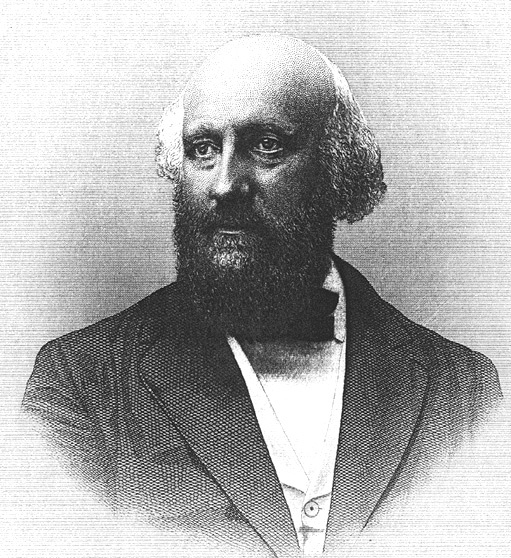
James Renwick Jr.
James Renwick Jr. won the 1846 competition to design the first Smithsonian Institution building. His design drew heavily from architectural styles of 12th-century Europe that gave the building a castle-like appearance. Although Renwick took pains to design the building to be fireproof, a fire destroyed part of the structure in 1865. In 1874, he completed the first Corcoran Gallery located on Pennsylvania Avenue near the White House. That building now bears his name and is part of the Smithsonian American Art Museum. -

Jesse Jackson Sr.
In May 1968, Jesse Jackson and other members of the Southern Christian Leadership Conference (SCLC) gathered in Washington, DC, to draw attention to poverty through the Poor Peoples' Campaign. Carrying on the work of Dr. Martin Luther King Jr. after his assassination in April of that year, the SCLC lobbied Congress to create laws that encouraged economic equality. To highlight issues of economic inequality, SCLC constructed a temporary encampment known as Resurrection City on the Mall near the Lincoln Memorial. Jackson served as city manager and mayor of the tent city for its six week existence. -
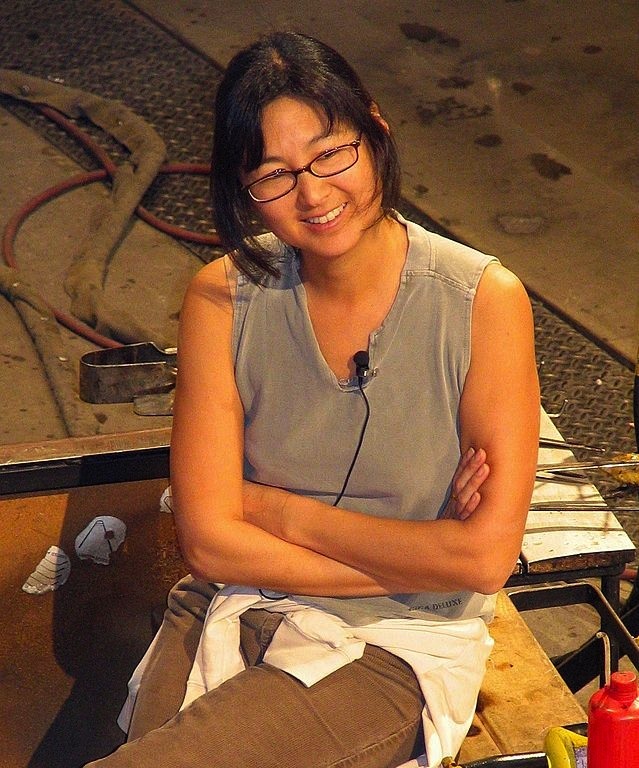
Maya Lin
Maya Lin won the design competition for the Vietnam Veterans Memorial in 1981. She was an undergraduate student majoring in architecture at Yale University when her design was chosen from nearly 1,500 entries. She proposed an abstract design in the shape of an open V, meant to look like a healing wound. Known as "the Wall," the Memorial was not liked by some members of Congress who expected a more traditional monument that looked like others present on the Mall. Lin defended her design before Congress, and visitors and veterans eventually embraced this design. -

Adolf Cluss
In the late 1800s, Adolf Cluss designed four buildings on the National Mall, only one of which still stands today. In 1870, he designed the Center Market. He also designed conservatories for the Department of Agriculture and the Army Medical Museum that stood on the south side of the Mall near what is now Independence Avenue. The surviving Cluss building on the Mall is the Arts and Industries Building, next to the Smithsonian Castle, which Cluss designed with partner Paul Schulze to be a National Museum and house the Smithsonian collections after the Institution outgrew the space in the Castle. -

Jan Scruggs
Decorated Vietnam veteran Jan Scruggs is the founder of the Vietnam Veterans Memorial in Washington, DC. He conceived the memorial as a tribute to all who served during one of the longest wars in American history. He started the project with $2,800 of his own money and collected nearly $8 million in private donations to fund the construction of the memorial. Scruggs currently serves as the President of the Vietnam Veterans Memorial Fund. -

James Smithson
British scientist James Smithson provided the funding necessary to create the Smithsonian Institution. Born in France and educated at Oxford University in England, Smithson was a wealthy chemist and mineralogist. He never married or had any children. In his will, he wrote that if his nephew, who was his only heir, died without heirs, then his entire estate should go to the United States to develop in Washington "under the name of the Smithsonian Institution, an establishment for the increase and diffusion of knowledge." Smithson's nephew died in 1835, and the Smithsonian Institution was founded in 1846.