Events
Item set
Items
-

Dedication of the Lincoln Memorial
Over 35,000 people attended the dedication ceremony for the Lincoln Memorial in 1922, ten years after construction began. At the ceremony, President Warren G. Harding, former president and Chief Justice of the Supreme Court Howard Taft, and Robert Moton, Principal of Tuskegee Institute spoke about Lincoln’s legacy and how the memorial might help heal sectional tensions in the US. Harding’s address was broadcast on the radio using an experimental radiophone developed by the US Navy. Attendees included Union and Confederate Civil War veterans and President Lincoln's son, Robert Todd Lincoln. Though the event emphasized reconciliation and unity, audience members watched from segregated seating. -
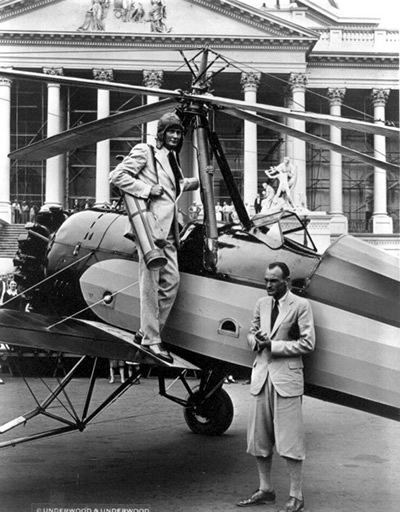
Senator Rides Autogiro from Capitol to Golf Game
On July 9, 1931, Senator Hiram Bingham boarded an autogiro at Capitol Plaza for a quick ride to the golf course. Bingham, a former pilot in World War I and supporter of the unique aircraft, used the opportunity to promote the safety and efficiency of the autogiro to a crowd of spectators and news media at the Capitol. The pilot, James Ray, transported Bingham from the Mall to Burning Tree Golf Club in 11 minutes, arriving 34 minutes faster than if he had driven. The Autogiro Company of America, founded by Harold F. Pitcairn, marketed the autogiro as a vehicle for the wealthy and frequently staged public events to promote sales of the aircraft. -
Autogiro Flies over DC
In December 1928, Harold F. Pitcairn piloted an autogiro from Philadelphia to Washington, DC to introduce this new aircraft to Americans. It was reportedly the first extended autogiro flight in the US. Pitcairn was an airplane manufacturer. Paramount Pictures captured the flight over the Mall in this newsreel. It was part of Pitcairn's marketing efforts to sell autogiros as personal aircraft to the public and policymakers. -

Funeral at Sylvan Theater
In May 1921, two local American Legion posts held a funeral at the Sylvan Theater to honor men from the District of Columbia who died overseas during World War I. The remains of Hiram F. Cash and Vincent B. Costello were present at the funeral. Although World War I ended in 1918, the remains of soldiers killed in Europe were not returned to the US for another 3 years. Private Costello was one of the first men from the District to die in the war, and Lieutenant Cash was a Washington native who died on the Western European front. The American Legion posts in Washington, DC were named in their honor. -

The Wedding
On October 10, 1987, 2,000 same-sex couples pledged their vows in a mass wedding behind the National Museum of Natural History and in front of the Internal Revenue Service building. The location allowed the group to protest the lack of recognition of same-sex domestic partners in the US tax code. Organizers also admitted that location was the only area where they could secure a permit to gather. Nearly 5,000 protesters filled the streets to watch or participate in the mass wedding presided over by minister Dina Bachelor. "The Wedding" was 1 event in a 6-day demonstration known as the Second National March on Washington for Lesbian and Gay Rights. -

White House Weddings
Since the wedding in 1812 of First Lady Dolley Madison's sister, close friends and family members of presidents married at the White House. A total of 17 couples tied the knot in the White House, including President Grover Cleveland. Many of these ceremonies captured interest from the national press. In 1913, descriptions of Woodrow Wilson’s daughter Jessie’s wedding cake, pictured here, noted approvingly that it was not very extravagant. In contrast, Richard Nixon’s daughter Tricia wed in 1971 on live television while the event included a 7-foot tall wedding cake. -

Mall Weddings
Since 1976, the National Park Service has allowed weddings and other special events to be held in 3 areas: the DC War Memorial, the George Mason Memorial, and the west lawn of the Jefferson Memorial. Anyone reserving one of these spaces must pay an administrative fee and abide by National Park Service rules meant to protect the property. During the government shutdown in October 2013, the Mall, like all national parks, was closed for public events forcing at least one couple to relocate their wedding. In 2014, 148 permits were given to couples who wed near the majestic monuments. -

Capitol Christmas Tree
Congress occasionally planted Christmas trees on the Capitol grounds, but it was not until 1964 when an annual ritual began. Senator Carl Hayden of Arizona, President Pro Tempore of the US Senate, presided over the first lighting ceremony on December 18. From 1964 to 1967, a live tree on the west side of the Capitol served as the official tree until it died in 1968. The Architect of the Capitol created a formal procedure for hosting "The People's Tree" in a specific location between the House and Senate sides. Since 1970, the US Forest Service has provided a tree selected from different national forests and delivers it with decorations made by school children from the tree's home state. -

First National Menorah Lighting
On the first night of Hanukkah in 1979, President Jimmy Carter walked from the White House to Lafayette Park to light the first public Menorah near the Mall. Sponsored by the American Friends of Chabad-Lubavitch, Abraham Shemtov and Levi Shemtov built the Menorah for several years. It was first called the National Menorah by President Ronald Reagan in 1982. The Menorah remained in Lafayette Square until 1987 when it moved to its current location on the Ellipse. The National Menorah is always lit by the President or a member of the President’s administration. -

First National Christmas Tree and Lighting Ceremony
On December 24, 1923, President Calvin Coolidge lit the first National Christmas Tree on the grounds of the Ellipse. Community volunteers and civic leaders, worked together with local schools and the Society of Electrical Development to organize the celebration. The tree came from President Coolidge's home state of Vermont and was covered with 2,500 electric lights. After the tree lighting, thousands of Washingtonians and visitors sang Christmas carols accompanied by a US Marine Band quartet at the White House. African American residents held their own ceremony at the tree starting just after midnight on Christmas morning. -

Deaf President Now Protest
On March 11, 1988, deaf students from Gallaudet University in Washington, DC marched to the steps of the Capitol protesting the selection of Elisabeth A. Zinser, a hearing person, as the University's 7th president. Student leaders directed the crowd in a chant that demanded a "Deaf President Now.” Protesters carried a banner that read “We still have a dream!” Faculty, students, and deaf community members attracted national press attention and closed the campus for a week-long protest. Due to the outcry, Zinser resigned and I. King Jordan became the first deaf president of Gallaudet, the world’s only university designed specifically for deaf and hard of hearing students. -

Black Panther Rally
In June 1970, the Black Panther Party held a rally on the steps of the Lincoln Memorial promoting the proposed "Revolutionary People's Constitutional Convention," to be held that September in Philadelphia. The goal of the Convention was to rewrite the US Constitution to ensure equal rights for oppressed groups, including African Americans, women, and young people. The organizers of the rally chose June 19, or Juneteenth, for its significance as the day in 1865 when enslaved peoples living in Texas were finally freed. Roughly 1,000 people attended the Mall rally. -
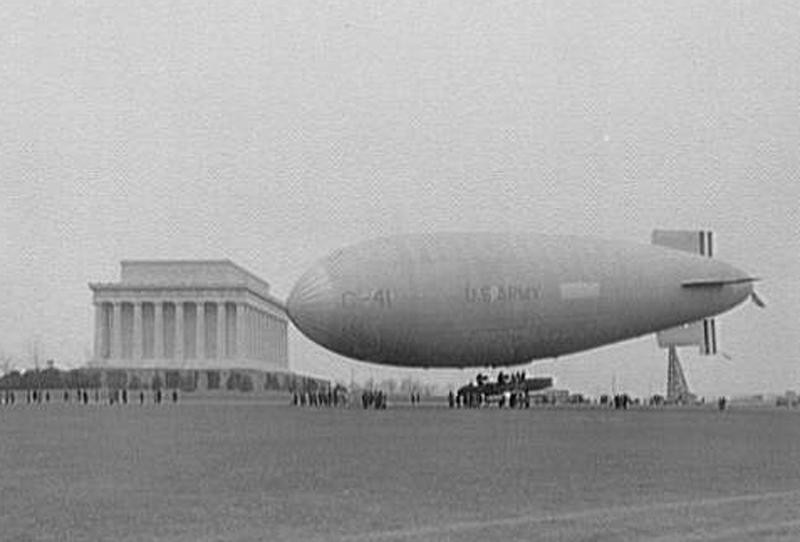
US Army Blimp Lands at Lincoln Memorial
In 1930, the US Army landed an open gondola blimp at the Lincoln Memorial, on a special trip to honor Lincoln's Birthday. Upon landing, the blimp's pilots placed a wreath at the Memorial. US Army blimps occasionally flew over Washington during practices flights from Langley Field in Virginia, but blimps rarely landed on the Mall. -

Spitfire Airplane Arrives at the Air and Space Museum
Before the National Air and Space Museum opened in July 1975, objects like this WWII-era "Spitfire" airplane arrived. To get the plane inside the museum, its wings were temporarily removed and it was led through the museum's west end windows. These windows were designed to open in such a way that large objects, such as aircraft and missiles, could easily move in and out of the museum. -

Steam Locomotive Installation at the National Museum of American History
The American Locomotive Company of Richmond, Virginia built this 280-ton passenger stream train in 1926 which arrived at the National Museum of History and Technology (now the National Museum of American History) to go on permanent display in the Railroad Hall. The retired rail car entered the museum during the original construction, on custom-built train tracks that led directly into the building. Once inside, the exterior museum walls could be completed. -

Statue of George Washington moving across the Mall
Horatio Greenough's 1841 sculpture of George Washington has lived in 4 different locations on the Mall. Originally built for the US Capitol Rotunda, Congress did not like the statue and moved it outside to the east lawn 1 year later. Still unhappy with the statue, Congress transferred it to the Smithsonian for display at the "Castle" in 1908. It remained there until 1962, when Smithsonian staff moved the statue by crane across the Mall to the new National Museum of History and Technology. Staff had to remove a glass window and several bricks in the Castle to move the statue out of the building, because it was too large to fit through the doors. -

Early Cherry Blossom Festival
As soon as the Japanese cherry trees were planted, Washingtonians and tourists enjoyed the blossoms every spring. Although there were cherry blossom fetes in the 1920s, they were mostly held in Hains Point. The first Cherry Blossom Festival, which was intended to be the start of an annual tradition, took place in the spring of 1934. First Lady Eleanor Roosevelt and a delegation from the Japanese embassy led the sunrise ceremony that opened the event. The Festival included a parade, a ball, fireworks, and a performance of the Mikado, an English operetta set in Japan, at the Sylvan Theatre. -
Disability Rights Protests at the Capitol
In March 1990, disability rights activists gathered at the west front of the Capitol to pressure the House of Representatives to pass a disability rights bill. The bill passed in the Senate the year before, but it stalled in the House. Nearly 1,000 people attended the rally. To protest the lack of accessibility inside the building, 60 people discarded their mobility devices and crawled up the 83 stone steps to the Capitol. Some Congressmen responded negatively to the protest, but it was successful: President George H. Bush signed the Americans with Disabilities Act into law on July 26, 1990. -

Rally to Restore Sanity and/or Fear
On October 30, 2010, Jon Stewart and Stephen Colbert led a rally on the National Mall. The event was a combination of Stewart’s “Rally to Restore Sanity” and Colbert’s “March to Keep Fear Alive”. The event drew 215,000 people and was thought to be a satire or spoof of events such as Glen Beck’s “Restoring Honor” rally. The satirical nature of the rally was a symbol of the normalization of protest on the Mall. -
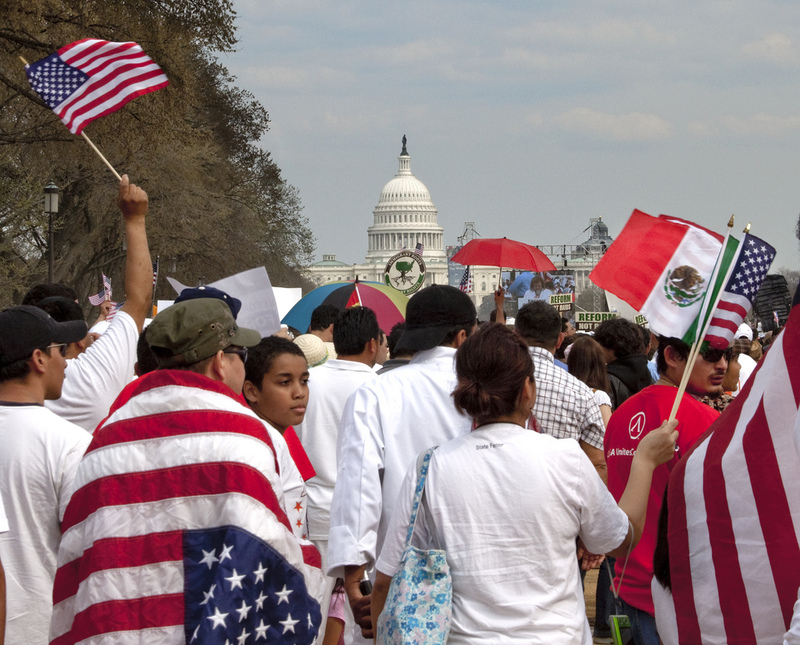
March for Immigration Reform
In March 2010, as Congress was finalizing the Affordable Care Act, immigrants and activists took to the National Mall to call for immigration reform. Participants urged President Obama to keep his campaign promise of comprehensive immigration reform and chanted “Yes we can,” his campaign slogan, in both English and Spanish. President Obama addressed the crowd through a recorded message and promised to continue to work with Congress to pass an immigration bill. -

National Powwows
The National Powwows began in September 2002. They were organized by the Smithsonian’s National Museum of the American Indian in anticipation of the opening of the museum. The events were attended by thousands from the US and Canada to celebrate American Indian culture through dancing, music, food, clothing, and events. Hundreds of tribes participated in a dance competition at the powwow, where members of the tribe wore traditional clothing. Subsequent powwows were held in 2005 and 2007. -
First Annual Smithsonian Kite Festival
The First Annual Smithsonian Kite Carnival (later referred to as the Kite Festival) took place on the National Mall on March 25, 1967. Individuals could compete in contests with homemade kites as well as ready-made ones. The festival also included kite-making workshops led by National Air and Space Museum curator Paul E. Garber, a lecture series, and a special display of kites made by Garber and his wife. The event was sponsored by the Smithsonian Institution for the first 44 years and became a part of the National Cherry Blossom Festival in 2010. -
America's Millennium Gala
America’s Millennium Gala was the culminating event of a larger three-day project celebrating the millennium. The event was produced by Quincy Jones and George Stevens Jr., hosted by Will Smith, and premiered a film by Steven Spielberg. Festivities began at 9pm on December 31st, 1999 and continued until 1am. Leading up to midnight, the western half of the Mall, between the Washington Monument and the Lincoln Memorial, featured a number of appearances and performances by popular musicians, as well as literary and scientific figures. The evening concluded with an extensive fireworks and lights display over the Washington Monument. -

Flood of 1889
On June 2, 1889, heavy rains caused massive flooding in Johnstown, Pennsylvania, and overwhelmed the South Fork Dam. The storm also hit the Washington, DC, area. As a result, the Potomac River flooded and areas around Pennsylvania Avenue were under several feet of water. The flooding was made worse by sewers that became clogged with dirt from unpaved roads and began overflowing, causing the water to rise. The only access between the east and west of the city was by boat. -

Washington Monument repair and theft of lightning rod points
During the fall and winter months of 1934, the Washington Monument was prepped for repairs and cleaning, due to cracking at the base. Scaffolding was built around the 550-foot monument to allow the workers to make the repairs with Public Works Administration funding. The restoration lasted 140 days, during which time the Monument remained open to visitors. However, on December 28th, 1934, someone scaled the scaffolding to remove 107 of the 170 gold-plated, platinum-tipped lightning rod points from the top of the monument. The points were valued at $8 each, which totaled $856. -

Reflecting Pool reconstructed
Restoration of the Lincoln Memorial Reflecting Pool began in November 2010. The two-year, $30.7 million renovation project almost completely rebuilt the structure. The 1923 original pool was built on an unstable foundation that sank and cracked. The overhauled pool is shallower, reinforced with over 2,000 pilings driven to the underlying bedrock, and a gray tint was added to increase the pool’s reflectivity. The water supply system was replaced, and instead of stagnant water, the supply is now circulated from the nearby Tidal Basin. Gravel sidewalks bordering the pool were also replaced with pavement to prevent erosion. -
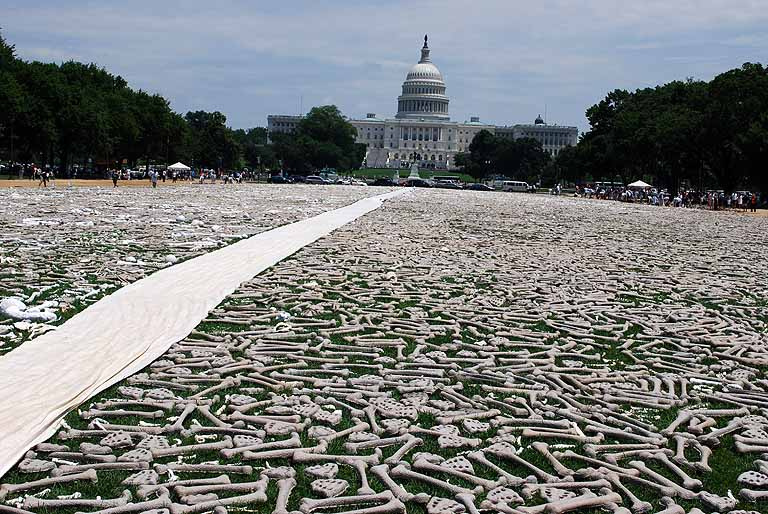
One Million Bones
The Art of Revolution, a group who uses symbolic events to spark political action and social change, staged the "One Million Bones" exhibit on the National Mall June 8-10, 2013. This event laid out one million handcrafted "bones" on the central green space of the Mall. These bones were created by students, educators, artists, and volunteers from across the country. The event was a call to action against genocide in such places as Sudan, South Sudan, the Democratic Republic of Congo, Burma, Somalia, and Syria. -

Latino Festival
The DC Latino Festival first began in 1970 as a neighborhood celebration of the diverse Latino community within Washington. Growing each year, the Festival moved to the Mall in 1989 and has also been held on Pennsylvania Avenue. Today the festival, also called "Fiesta DC," is a large event featuring a parade and pavilions for arts and crafts, education, food, and embassy representatives. -

The National Black Family Reunion
The National Black Family Reunion is a cultural event held annually on the Mall. Sponsored by the National Council of Negro Women (NCNW), the event celebrates black community, church, and family values. It was first established by Dr. Dorothy I. Height, former chair of the NCNW and longtime activist, to combat negative stereotypes about the African American family. The event features food, entertainment, education, and cultural activities. -

Founding of the Society for a More Beautiful National Capital
First Lady Lady Bird Johnson was a conservationist and lover of nature. She believed that the environment could help shape people's lives by improving their health and attitudes. In 1964, she established the Society for a More Beautiful National Capital to improve neighborhoods and tourist attractions in Washington, DC. Her projects centered around trash cleanup, building renovation, and planting flowers. She hoped that Washington would become an example to the rest of the cities of the country for the power of beautification. -

White House construction
When President Truman moved in in 1945, the White House was showing its age. Burned by British troops in 1814, renovated in 1902 and 1927, and expanded several times, the piecemeal and constantly incomplete renovations to the White House had left the building structurally unsound. Beginning in 1949, Truman and his family moved into the Blair House across the street so that the White House could be entirely gutted. New foundations, wiring, plumbing, duct work, and other utilities were added. Designers had intended to reuse historic wall paneling but it was not practical, so reproductions were used instead. -

Admiral Nimitz Parade
In October 1945, World War II Fleet Admiral Chester W. Nimitz was honored with a parade in Washington, DC, before being presented with a Gold Star by President Truman for his service as the Commander in Chief of the US Pacific Fleet and Pacific Ocean areas from 1944 to 1945. Nimitz had represented the United States at the formal surrender of Japan in September 1945. Thousands of sailors, Marines, and women from WAVES units marched in his honor. A large replica of the USS Missouri, site of the Japanese surrender, served as the parade's grandstand at the base of the Washington Monument. -

Million Man March
This march on the National Mall for African American civil rights was proposed by Louis Farrakhan and organized with the support of the National African American Leadership Summit, the Nation of Islam, and various civil rights organizations. The March organizers wanted to challenge what they perceived as growing racism in the United States, particularly in government policy, and to present a new definition of black manhood to the nation. The main focus of the event was sessions held on a stage near the west front of the Capitol. Estimates for attendance vary, ranging from 400,000 to 870,000 people. -

America's Reunion on the Mall
This festival celebrating American cultural diversity was held on the days leading up to the first inauguration of President Bill Clinton. It was organized by the Inaugural Committee, with support from the Smithsonian Institution, the Library of Congress, and the National Park Service. Three food tents offered cuisine from all over the United States. There were multiple stages where musical performances were held throughout the day for all three days of the festival, as well as a kickoff concert at the Lincoln Memorial headlined by major artists including Michael Jackson, Aretha Franklin, Ray Charles, and Michael Bolton. -

Baseball Tournament on the Ellipse
In August 1865 the Washington Nationals Baseball Club invited the Philadelphia Athletics and the Brooklyn Atlantics to come and play in what was billed as a tournament. The Nationals constructed stands for spectators on their home turf just south of the White House, the area we now call the Ellipse. Over 10,000 people came to watch the games, even with an admission fee of $1. The Nationals faced the Athletics on August 28 and the Atlantics on the 29th, losing both games. The two out of town teams did not play each other. -

Assassination of President James A. Garfield
On July 2, 1881, a deranged Charles Guiteau shot President James A. Garfield at the Baltimore and Potomac Railway Station. Guiteau was an unsuccessful lawyer, evangelist, and insurance salesman, who thought that the President owed him a government job. Garfield died from complications from the wound on September 19. Pennsylvania Railroad Company placed a plaque and a star on the location of the assassination. However the public often complained that they disliked the reminder of the crime every time they entered the waiting room, and the company removed the commemorative tablet and star in 1897. Today, Garfield's is the only unmarked presidential assassination. -

Inauguration of President William Henry Harrison
In February 1841 President-elect William Henry Harrison arrived during a snowstorm at the Baltimore and Ohio railway station near the US Capitol. The first president to arrive at an inaugural by train, his inauguration also marked the first time an official committee of citizens planned the events. At 8,445 words, Harrison delivered the longest inaugural address on record, but served the shortest time of any American president. His inaugural took place on the east side of the Capitol building in overcast, windy weather. Three weeks later, he became ill and died after only 32 days in office. -

Flood of 1936
One of the highest floods to hit Washington, DC, occurred on March 20, 1936. Flood waters crested at the Key Bridge at 18.5 feet. Around the Mall, much of East and West Potomac Parks were underwater, and some cherry trees were killed. Advance warning allowed the Capital Park Service to construct a temporary dike of stone and sandbags from 17th Street near the Washington Monument along the north side of the Reflecting Pool to the Lincoln Memorial. Later the same year, Congress passed the Flood Control Act of 1936, which included provisions for building permanent levees to protect the National Mall. -

Lindbergh receives Distinguished Flying Cross
On June 11, 1927, President Calvin Coolidge awarded American aviator Charles Lindbergh the Distinguished Flying Cross in a ceremony held on the north side of the Washington Monument Grounds. Lindbergh, who was 25 years old, had completed the first successful transatlantic solo flight from New York City to Paris, France. 200,000 people attended the ceremony on the Mall, and more watched the parade of Lindbergh and his plane from the Navy Yard to the Washington Monument. His plane, the Spirit of St. Louis, is now on display at the National Air and Space Museum on the Mall. -

Potomac Flats Reclaimed
In 1870 the Army Corps of Engineers, headed by Major Nathaniel Michler, began dredging the Potomac to remove silt and improve ship traffic. Dredged material was dumped into the tidal flats along the Washington waterfront. In 1875 the project was expanded to include reclaiming the flats. The initial experiment lasted until 1882, but the reclamation continued until August 30, 1911, by which time contractors had moved over 12 million cubic yards of material from the river to the flats, creating Potomac Park. -

Washington Canal Groundbreaking Ceremony
In May of 1810 President James Madison broke ground for the Washington Canal amidst city officials and citizens crowded at New Jersey Avenue SE. The Canal was part of the original city plan from 1791, but work stalled until 1809 when Congress chartered a new company to complete the canal. President Madison, the president of the company, and the city mayor each dug a small hole with a shovel at the groundbreaking. As a horse and plow began digging the canal in earnest, onlookers celebrated with enthusiasm and enjoyed free refreshments under a large tent. -

George Washington fires Major Pierre Charles L'Enfant
In February 1792 President George Washington dismissed city planner Major Pierre Charles L'Enfant, who had been hired to design the new capital but continually argued with the Federal City commissioners. One of L'Enfant's most offensive acts was demolishing the house of local landowner Daniel Carroll because it stood in the way of a new road. Although Carroll was eventually reimbursed for the damages, the event led Washington to fire L'Enfant. However, L'Enfant's design for the city was still adopted and is visible in the grid and spoke pattern of Washington, DC, today. -

National March on Washington for Lesbian and Gay Rights
The National March on Washington for Lesbian and Gay Rights, held on October 14, 1979, was inspired in part by the assassination of openly gay California politician Harvey Milk. The five issues the march supported included the end of anti-homosexual laws and a push for a ban on discrimination in the federal government based on sexual orientation. Thousands of people attended, and the event nationalized the movement for gay rights, which was previously fragmented and focused on problems in individual communities. -

The Rabbis' March
On October 6, 1943, a group of 400 rabbis walked from Union Station to the US Capitol, Lincoln Memorial, and White House in an effort to raise awareness that millions of European Jews were being killed or imprisoned by the Nazi regime. Led by Hillel Kook, the rabbis marched to the White House to urge President Franklin D. Roosevelt in person to resuce Jewish victims of the Holocaust. Roosevelt would not meet with them, but Vice President Henry Wallace accepted a petition from the rabbis calling for immediate US action. Many moderate Jewish leaders opposed the march, but the rabbis march on the Mall caught the attention of the American press, bystanders, and the Roosevelt administration. -

Prayer Pilgrimage for Freedom
Held in the spring of 1957, the Prayer Pilgrimage for Freedom was organized by the newly formed Southern Leaders Conference (later known as the Southern Christian Leadership Coalition or SCLC). 25,000 demonstrators attended the event at the Lincoln Memorial, urging the Eisenhower administration to push for compliance with Brown v. Board of Education's school integration. Martin Luther King Jr. gave the keynote speech at this event, which reinforced his role as a new key leader in the civil rights movement. -

Tractorcade Occupies the Mall
Hundreds of tractors paraded into Washington in February 5, 1979 to protest existing agriculture policies. The American Agriculture Movement organized this protest in 1979 after the 1st Tractorcade in 1978 did not bring changes they demanded. After slowly riding into Washington, the tractors were barricaded on the Mall where they had parked. Farmers stayed and occupied the Mall while police allowed tractors out for permitted demonstrations. Residents and Congressmen grew tired of the tractors and did not appreciate the damage caused on the Mall's grounds. When a blizzard shut down Washington on Presidents' Day, the occupying farmers helped the city by plowing streets, rescuing stranded residents, and transporting medical staff to hospitals. Residents grew more sympathetic to the farmers' cause after the snowstorm. By March 1, 1979, the tractors began leaving the city and the Mall's ground re-opened for public use. -

US Airmail Service Begins
The first airplane carrying US mail left the Washington Polo Grounds, now in West Potomac Park, on May 15, 1918. The US Post Office Department created air mail service to speed up the delivery of mail traveling between Washington, Philadelphia, and New York. President Woodrow Wilson presided at this event that drew a large crowd of spectators to the southwest end of the Mall. US Army Lieutenant George L. Boyle piloted the inaugural flight, but it never reached Philadelphia. Boyle crash landed near Waldorf, Maryland. After a rough first day, the post office began moving mail by planes regularly. -

Moratorium to End the War in Vietnam
The Moratorium to End the War in Vietnam began as nationwide anti-war protests which took place during October 1969. A month later, on November 15, roughly half a million people gathered in Washington for anti-war activities. Protesters spoke out in all parts of the city, including on the National Mall. Folk singer and activist Pete Seeger led a large group in singing protest songs near the Washington Monument. The March Against Death took protesters past the White House, where they spoke aloud the names of American soldiers who had been killed in Vietnam, often naming a relative. -

First White House Easter Egg Roll
The first official White House Easter Egg Roll was held Monday April 22, 1878. Earlier in the 1870s, children rolled eggs across the lawn at the US Capitol. Congressmen were not pleased with this activity and in 1877 prohibited the Capitol grounds from being used as a playground. On Easter Monday, 1878, President Rutherford B. Hayes and his wife Lucy opened the White House lawn to egg rollers. Soon after, the Easter Egg Roll became a White House tradition, and was one of the few events in Washington that was never segregated. In this photo from 1929, a youngster shares her candy with a stuffed rabbit on the White House lawn. -

Smithsonian Metro Stop Opens
The Smithsonian Metro station opened on July 1, 1977 giving visitors and residents a new option for taking public transportation to the Mall. At the official opening, the Metro's General Manager presented the Assistant Secretary of the Smithsonian with a fare card to add to the institutional collections. -

First Annual Screen on the Green Festival
The summer outdoor film festival “Screen on the Green” on the National Mall began in 1999. Held at sundown throughout July and August, this free event is one of the most popular social and recreational events held on the Mall among locals and visitors alike. The films shown that first summer were Casablanca, The Wizard of Oz, Citizen Kane, King Kong, and Rebel without a Cause. -

First Televised July Fourth Celebration on the National Mall
On July 4, 1947, Washington, DC's Independence Day celebration was televised for the first time. The Mall was the backdrop for the national event attended by nearly 225,000 people. Spectators on the Mall, and many watching on television, enjoyed musical performances by military bands, speeches by elected officials and World War II veterans, and a fireworks display. -

Queen Elizabeth visits the Smithsonian "Castle"
In July of 1976 Queen Elizabeth II came to the US to commemorate the Bicentennial of the American Revolution. One of her stops while in Washington, DC, was the Smithsonian Institution Building, or the “Castle,” and the National Mall. The night before, her Majesty had been an honored guest at a state dinner in the Rose Garden within President’s Park, hosted by President Gerald Ford. At the Castle, she was greeted by the Smithsonian's Vice President, Nelson Rockefeller, and Secretary S. Dillon Ripley. -

First Festival of American Folklife
Now called the Smithsonian Folklife Festival, the first Festival of American Folklife was created by Secretary of the Smithsonian S. Dillon Ripley and James R. Morris. Smithsonian Secretary Dillon Ripley wanted to change museums from stuffy institutions to lively participants in national life. The festival included about 84 folk artists, including musicians, craftsmen and women, singers, and dancers. It has grown to become one of the largest annual cultural events in Washington, bringing more than 23,000 musicians, artists, performers, craftspeople, workers, cooks, storytellers, and others to the National Mall to demonstrate the skills, knowledge, and aesthetics of people around the world. -

Boy Scout Jamboree
The 1937 Boy Scout Jamboree was the first ever “jambo” event, now held every four years. 25,000 Scouts from around the country attended the event, camping for more than a week around the Washington Monument and Tidal Basin. Scouts rode in the Goodyear blimp, toured the city, and went to baseball games. Professional chefs who were unemployed during the Depression prepared food for the encampment in large centralized tents. President Franklin Roosevelt conducted a grand review of the Scouts in formation on Pennsylvania Avenue. -

Tidal Basin Beach Officially Opens
Even before the Tidal Basin was constructed, planners proposed to use it as a recreational bathing beach. On August 24, 1918, the Tidal Basin bathing beach officially opened with a water carnival. Diving competitions, swimming competitions, and canoe tilting contests were all held for men and women. The beach remained open until the mid-1920s, when it closed due to pollution. -

Cherry Tree Protest at Jefferson Memorial site
In November 1938 a group of white women led by Eleanor Patterson, owner of the Washington Times-Herald, protested the removal of cherry trees from the Tidal Basin to make way for the Jefferson Memorial. On November 18, the women chained themselves to trees at the Memorial worksite and stole workmen's shovels. Their tactics delayed cherry tree removal until officials convinced the women that after the removal of cherry trees to make way for the Memorial, more would be planted elsewhere along the Tidal Basin. -

Resurrection City
Resurrection City, organized by Ralph Abernathy, was part of the 1968 Poor People's Campaign, a demonstration for full employment and living wages. During May 1968 thousands of demonstrators representing communities across the country lived in a shantytown of plywood and canvas homes south of the Reflecting Pool. Intense rainfall flooded the encampment and internal dissension plagued the city. Resurrection City's Park Permit expired on June 23. The next day, police moved through the area, tearing down the buildings and arresting nearly 300 people. Sometimes remembered as a failure, Resurrection City nonetheless brought together many disparate groups to work toward common goals. -

Senate Park Commission releases the McMillan Plan for the National Mall
In 1902 the Senate Park Commission announced a plan to renovate the National Mall. Named after the committee chair, Senator James McMillan, the McMillan Plan redesigned the layout of the Mall from a system of informal gardens to today's streamlined, symmetrical, neoclassical landscape and architecture. This plan also supported the creation of monuments and museums along the expanse of the Mall, and the integration of East and West Potomac Parks into the National Mall. The McMillan Plan changed the Mall from a commercial area and city park into a monumental center for the nation. -
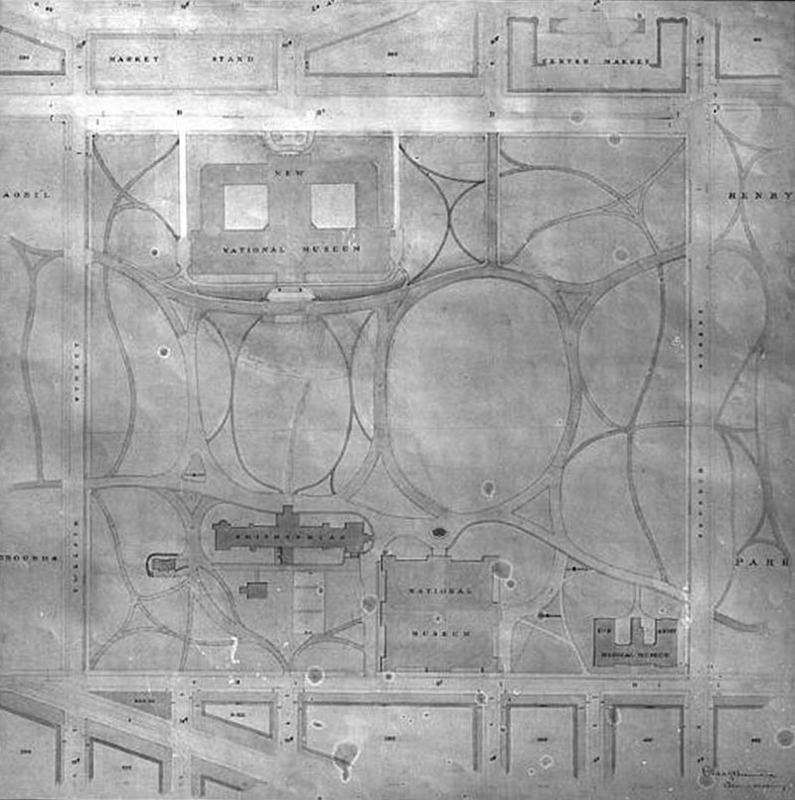
Andrew Jackson Downing creates a landscape plan for the Mall
In 1850 President Millard Fillmore asked Andrew Jackson Downing, the nation's preeminent landscape gardener and advocate of a rural American style, to design the landscaping for the largely undeveloped National Mall and Smithsonian grounds. Downing’s plan departed from the classic design originally planned for the Mall. A champion of public parks, Downing created a plan which connected four different, but compatible, garden spaces extending from the Capitol to the Washington Monument and using flora and fauna indigenous to the US, created a public museum of living trees and shrubs. Congress failed to allocate funds, however, and Downing’s plan never materialized. -

Longest Walk ends at National Mall
In February 1978 the American Indian Movement began The Longest Walk, a cross-country march beginning on Alcatraz Island in California, to support tribal rights and bring attention to 11 pieces of legislation before Congress affecting American Indians. The proposed legislation changed the provisions of early treaties on tribal government, hunting and fishing rights, and schools and hospitals. Marchers arrived in July. Tribal elders and walk leaders camped in tipis on Washington Monument grounds. Over the course of a week, they held rallies and meetings throughout Washington, including at the Capitol, Supreme Court, and White House. None of the bills they protested were passed. -

First Rolling Thunder Rally
The first Run to the Wall event, now known as Rolling Thunder, was held on Memorial Day in 1988. The rally was organized by Vietnam veteran Ray Manzo who wanted to bring national attention to the plight of prisoners of war and soldiers missing in action in Southeast Asia. Working together with the Vietnam Veterans Motorcycle Club, Manzo encouraged many veterans and supporters to ride into Washington and gather on the Mall. Approximately 2,500 bikers participated in the first rally. Rolling Thunder continued to grow and now occurs every Memorial Day weekend. -

US Marine Band's First Public Concert
On August 21, 1800, the Marine Band gave its first public concert in Washington on a hill overlooking the area which became the National Mall. At the time, the band probably consisted of two oboes, two clarinets, two French horns, a bassoon, and a drum. The United States Marine Band was created by an Act of Congress in 1798 to provide music for the President. When the seat of government moved from Philadelphia to Washington in 1800, the Band followed, performing for President Adams at the unfinished White House on New Year's Day 1801. -

Washington Canal filled in
By 1871, the Washington Canal was little more than an open sewer. Although many people proposed ways to make the canal functional, no solution was ever put into practice. In February 1871 Congress revoked the charters that made Washington and Georgetown independent cities and brought the entire District of Columbia under a territorial government. The Director of the Board of Public Works for this new territory, Alexander Shepherd, immediately enacted a solution to the canal problem by filling it in. The newly created road where the canal had been was first called B Street, then renamed Constitution Avenue in 1931. -

Presidents' Day snowstorm of 1979
On Presidents' Day 1979 a 22-inch blizzard shut down Washington, DC. Forecasters had predicted that the storm would bypass the city, so residents and city planners were taken by surprise. For the first time in fifty years, the Smithsonian museums were closed for two days in a row. Farmers in town to protest agricultural policy as part of a movement called "Tractorcade" used their tractors to help clear streets and get emergency personnel to hospitals. -

T.S.C. Lowe launches balloon test flight
On June 16, 1861, on the site of today’s National Air and Space Museum, T.S.C. Lowe launched his balloon the "Enterprise." Only months into the Civil War, Lowe launched his balloon in order to convince President Lincoln of the usefulness of the invention for military reconnaissance missions. Lincoln approved Lowe's Balloon Corps, a team of hand-picked aeronauts who conducted aerial reconnaissance for the Union Army between 1861 and 1863. -

Proprietors deed land for new capital
In July 1790, when Congress approved the establishment of a federal capital on the Potomac River, the area they chose was already owned by people who lived and farmed there. President George Washington and other government officials negotiated with these proprietors to convince them to sell or donate the land to the United States. In March 1791 fifteen proprietors signed an agreement that sold half of their property to the government, while they kept the rights to the other half, which allowed the city to develop while residents kept their homes. Formal deeds of transfer were registered in December 1791. -

Carousel Opens on the Mall
On April 12, 1967, a classic wood merry-go-round with 33 animals and 2 chariots moved to the National Mall near the Smithsonian Arts and Industries Building. Rides cost 25 cents apiece. In 1981 museum officials replaced the worn-out merry-go-round with the present, larger carousel, a 1947 vintage model with 60 horses. Music for the first merry-go-round came from a Wurlitzer band organ with wooden pipes and bellows. Today the carousel’s music wafts from a CD player. -

Cornerstone Laid for the Washington Monument
In 1848 the Freemason Society laid the cornerstone for the Washington Monument during an elaborate Fourth of July ceremony commemorating George Washington. Thousands attended, including the President and Vice-President, Congressmen, representatives of Indian tribal nations, and other dignitaries. Speaker of the House Robert Winthrop delivered a carefully planned speech, avoiding the controversial political issues of 1848, such as the war with Mexico, relationships with the Vatican, and conflicts over slavery. -

Tidal Basin Beach Closes
The public bathing beach at the Tidal Basin closed in 1925 after less than a decade in operation. This swimming area was segregated, open only to whites. Congress controlled the Washington DC budget and received increasing pressure from the African American community to create a beach for African Americans on the Tidal Basin, equivalent to the white beach. Although Congress approved funding for a second beach, debate within Congress halted progress on its creation. As the conflict intensified, funding for both beaches was canceled and Congress ordered the demolition of the white beach. -

Work Begins on the Smithsonian "Castle"
James Renwick, Jr began work on the original Smithsonian Institution building in 1847. Renwick's design was inspired by western European structures originally built in the 1100s, making this Gothic Revival building look like a castle. When construction began, the Mall was quiet and the Smithsonian building was isolated from the city Washington. When it opened in 1855, the Castle housed the first museum on the Mall. -

Washington's First Streetcar Line Opens
In 1862 the Washington & Georgetown Railroad Company opened Washington, DC's first streetcar line running nine horse-drawn cars on tracks extending from the US Capitol to the State Department. The growth of public transportation was fed by the influx of people into the nation's capital during the Civil War, the development of military depots and equipment, and increased government and residential activity. By 1863, the Washington & Georgetown ran 18 miles of track, and in 1864, reported a nine percent profit and an estimated 7.5 million passengers rode its horse cars. These first cars were segregated; African Americans rode only on front and rear platforms. -

National Drill and Encampment
In May 1887, militia groups from nineteen states and the District of Columbia participated in a drill competition on the National Mall. They set up their tents on the grounds of the Washington Monument and participated in marching, drilling, and shooting competitions on the Ellipse. Militia drill competitions were popular in the 1880s, but this was the first time black companies competed against white. Two white companies from Mississippi and Tennessee refused to march in a parade when they were placed behind a black company. Hospital tents near the encampment were provided by the Red Cross and overseen by Clara Barton. -
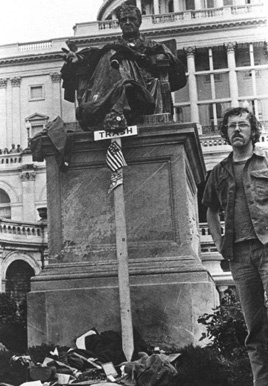
Dewey Canyon III – Vietnam Veterans protest the War
For a week in April 1971, Vietnam veterans camped on the Mall near the Capitol to protest the Vietnam War. The veterans set up camp in defiance of recent court rulings declaring it illegal to sleep on the Mall. The protest was organized by Vietnam Veterans Against the War and named after Operation Dewey Canyon I and II, military invasions of Laos in 1969 and 1971. Veterans attended hearings by the Senate Foreign Relations Committee and protested at Arlington National Cemetery, the Supreme Court, and the Pentagon. On the last day of the protest, Veterans threw their medals, discharge papers, and other war mementos onto the steps of the Capitol. -

1963 March on Washington for Jobs and Freedom
Roughly 250,000 people joined The March on Washington for Jobs and Freedom, one of the largest civil rights demonstrations in US history. Marching for social and economic equality, the crowd stretched from the Washington Monument to the Lincoln Memorial. Dr. Martin Luther King, Jr. delivered his "I Have A Dream Speech" on its steps. The march influenced Congress to pass the Civil Rights Act (1964) and the Voting Rights Act (1965). -

Earthquake on the National Mall
On August 23, 2011, a 5.8 magnitude earthquake affected the Washington, DC area and much of the east coast. From its epicenter in Louisa County, Virginia, the unusual quake caused minimal damage. However, the exterior of the Washington Monument had several large cracks that required repair. The National Park Service closed the Monument for safety and the structure was clad in scaffolding until the repairs were completed in May 2014. -

Wi-Fi Comes to the National Mall
In 2010 the DC government announced that public wireless internet was available on the National Mall. Visitors and residents can get online by logging into “DC Wifi” using wifi-enabled devices. The Smithsonian Castle Information Center, National Gallery of Art, Museum of National History, Museum of American History, US Department of Agriculture, National Air and Space Museum, and the Museum of the American Indian serve as hotspots for the network. Outdoor wifi is accessible from the Washington Monument (14th Street) and the Capitol (3rd Street) and between Constitution and Independence Avenues. A map of hotspots in the District can be found here. -

First Watergate Barge Concert
At sunset on July 14, 1935, Dr. Hans Kindler conducted the National Symphony Orchestra in the first performance at the Watergate steps near the Lincoln Memorial. The orchestra played from a specially contracted barge anchored in the Potomac near the steps. Tickets ranged from 25 cents to a dollar, although people listened for free from nearby boats and the Arlington Bridge. The first concert included pieces by Wagner and Johann Strauss and the Tchaikovsky's 1812 Overture. President Franklin Roosevelt dropped in to listen shortly before intermission. Watergate concerts continued until the 1960s. -

Snow Riot
Washington's first race riot spilled to the edges of the National Mall in 1835. On August 12, angered at rumors of a slave attack on a white woman, a mob of angry white men descended on the Epicurean Eating House owned by Mr. Beverly Snow at Sixth and Pennsylvania Avenues. A successful African American entrepreneur, Snow fled his restaurant while the mobs continued to attack the property of free blacks across the city. The upheaval became known as the Snow Riot. Afterwards, Black Codes, restrictive legislation limiting the rights of free blacks in the city, became increasingly harsh. -

AIDS Quilt displayed on the National Mall
The first display of the Project NAMES Aids Memorial Quilt was on the National Mall on October 11, 1987, during the National March on Washington for Lesbian and Gay Rights. Composed of nearly 2,000 panels, the Quilt was larger than a football field. Cleve Jones, a gay rights activist from San Francisco, conceived the Quilt in 1985 during a candlelight march in memory of Harvey Milk and George Moscone. Panels were, and still are, created by family and friends of those who have died of AIDS. In the first weekend over half a million people visited the Quilt while volunteers stood at a microphone and read the names of people remembered on the panels. This has become a tradition followed at nearly every display of the Quilt. -

First Performance at the Sylvan Theater
The first performance at the Sylvan Theatre on the Washington Monument grounds took place on the evening of June 2, 1917. Artist and philanthropist Alice Pike Barney Hemmick founded the theater, believing that Washington needed a nationally supported theater and that an outdoor theater would be a good first step. The performance on opening night consisted of speeches, a rendition of "The Star-Spangled Banner" by the Marine Band, and a play written by Mrs. Hemmick. Over 6,000 people attended the Sylvan Theater first show. -

Samuel Morse sends first telegraph message from the US Capitol
On May 24, 1844 after receiving $30,000 in appropriations from Congress, inventor Samuel Morse sent the first official telegraph message from Washington, DC to Baltimore, Maryland. In a series of dots and dashes, later known as Morse code, Morse transmitted the message "What Hath God Wrought" from the Supreme Court Chamber, then located inside the Capitol. Before the telegraph, information transmission was limited to the speed of horse travel, but could now be transmitted wide distances almost instantly. The telegraph office existed inside the Capitol until 2007. -

Ku Klux Klan Rally
In 1925 the Ku Klux Klan (KKK) marched down Pennsylvania Avenue in Washington, DC. The organized event brought 25,000 members in full regalia to the city. Demonstrating at the height of their power, the KKK was a national fraternal organization founded on the premise of white supremacy. The KKK attacked the social and political rights of African Americans, immigrants, Catholics, and Jews. First founded in 1865, the power of the Klan peaked during the 1920s when urbanization, industrialization, and immigration frightened many Americans. -

Bonus March
In May 1932, 17,000 World War I veterans and their families arrived in Washington, led by Walter W. Waters. Propelled by hard economic times of the Depression, they called themselves the Bonus Expeditionary Forces. They traveled to Washington to ask Congress to authorize immediate payment of bonuses for their war service, not scheduled to be paid until 1945. Some of the veterans camped on the grounds of the Capitol while the families built shanties on the Anacostia flats. On July 28, President Hoover ordered police to evict marchers. The confrontation between veterans and police resulted in the death of two veterans. The US Army took over and drove the Bonus Marchers from Washington. -

Pierre L'Enfant plans the Federal City
In 1791, President George Washington hired Pierre Charles L'Enfant to create a plan for the layout of the federal city. L'Enfant focused on the area between Tiber Creek, today Constitution Avenue and the Eastern Branch, also called the Anacostia River. L'Enfant surveyed the area in the spring of 1791 and created a plan for the city by the end of the year. This plan established the placement of the Capitol and President's House, now called the White House, and recommended the creation of the public promenade from the Capitol to the Potomac, the area we now call the National Mall. -

Black Blizzard blankets the National Mall
In March 1935, the sky went dark over Washington, DC as a dust storm from the midwest blanketed the city. As this offshoot of the Dust Bowl moved over the nation's capitol, Hugh Bennett, head of the Soil Erosion Service in the Department of Agriculture, was testifying before Congress about the urgent need for money and programs to combat the Dust Bowl. As he spoke the air became thick with dust. People swarmed out of government buildings and onto the Mall to watch the sky. The black blizzard brought home the need for action. One month later Congress voted permanent funding for an independent Soil Conservation Service. -

Baltimore & Potomac Railroad bisects the National Mall
In 1872, the Baltimore and Potomac Railroad Station opened near the Capitol, crossing the parks and lawns of the National Mall. The first train departed at 5 a.m. on July 2 with sixty passengers. The depot buildings were opened in 1874. The presence of the railroad on the Mall was controversial until it was removed in 1907. Although the Mall was barely developed when the railroad arrived, some argued that the noisy, dirty, smelly steam-driven locomotives would ruin the landscape of the park. Others believed that the Mall could accommodate both technology and nature and that the railroad represented progress and economic growth. -

Center Market Opens
The Center Market, one of the first formal markets in Washington City, opened in mid-December 1801. The market's location was proposed in the early plans of the city and George Washington had set aside land for its establishment in March 1797. Laws governing the market encouraged local farmers to bring their products into the city and contributed rental revenues to the city's poor fund. The market was near Tiber Creek, the planned route of the Washington City Canal, which provided easy transportation. -

Nixon Inaugural Ball in the Museum of History and Technology
The Smithsonian Museum of History and Technology (now the National Museum of American History) hosted one of the five Inaugural Balls for Richard Nixon's second Presidential Inauguration in January 1973. During the party, a rooster escaped from an exhibit on early American farm life and started bothering some of the guests. Secretary of the Smithsonian S. Dillon Ripley rescued the rooster and returned it to its exhibition, but not before a newspaper photographer caught the wayward bird on camera. -

Act of Congress establishes the Smithsonian Institution
James Smithson, an English scientist, specified in his will that if his nephew, Henry J. Hungerford, died without heirs, his estate should be given to the United States to found an institution "for the increase and diffusion of knowledge." Smithson died in 1829 and his nephew died in 1835, without heirs, leaving $508,318 to the people of the United States. In August 1846, President James K. Polk signed an act creating the Smithsonian Institution, to be established in Washington, DC, either in a building of its own or in a wing of the Patent Building. -

Coxey's Army
In 1894, economic depression brought more than forty different armies of unemployed workers to Washington, DC. Jacob S. Coxey, a wealthy Populist, led the most well known of these groups. Publicity of the march worried the authorities and 1,500 soldiers were stationed in Washington to meet them. However, when they arrived on May 1, 1894, the “army” numbered only 500. Coxey was prevented from speaking at the US Capitol when he was arrested for walking on the grass. This was the first large scale protest on the National Mall. -

Fire in the Smithsonian Building
The original Smithsonian Institution Building, often called the Smithsonian Castle, caught fire in 1865 when workmen mistakenly installed a stovepipe in the building wall. The building was poorly fireproofed and the fire kindled unnoticed within the walls for several days. When it erupted, it destroyed the lecture hall, apparatus room, Board of Regent's room, Secretary's office, the Picture Gallery, and all the priceless artifacts they housed. The main room of the museum and the library were saved. The Castle was rebuilt beginning in spring 1867 and fireproofed throughout. -

First Execution in Washington: James McGirk
James McGirk, also spelled McGurk, was hanged on October 28, 1802, near the Capitol in the same area today occupied by the statues of Presidents Garfield and Grant. He was the first person executed in the District of Columbia. In April 1802, McGirk was convicted of having beaten his wife to death shortly after she delivered stillborn twins; newspapers speculated that his repeated physical abuse may have contributed to the infants' death. Appeals to President Jefferson by McGirk and his lawyer for a stay of execution were unsuccessful. -

Burning of Public Buildings, War of 1812
After defeating American troops at the Battle of Bladensburg in 1814, British troops under the command of Rear Admiral George Cockburn and Major General Robert Ross entered Washington, intent on destroying government property. First Lady Dolley Madison fled the White House at the last moment but managed to save important documents and, with the help of slaves and servants, a portrait of George Washington. The British set fire to the White House, the Capitol, the Navy Yard, and other public buildings. The destruction of the federal city was devastating to the American people, and Congress debated relocating the capital city. -

The Woman Suffragist Parade of 1913
Over 5,000 marchers, mostly women, came to Washington, DC, from around the country to participate in the Woman Suffrage Parade of 1913. They marched down Pennsylvania Avenue from near the Capital to the Treasury Building. The mostly male crowd lining the street was hostile to the women and their aim of enfranchisement. Marchers were jeered, shoved, and tripped with police doing little to help. Eventually troops from nearby Fort Myer had to be called in for crowd control. Despite setbacks some were able to make it to the grandstand at the Treasury Building to speak. The parade and the crowd’s reaction reinvigorated support for the suffragists. -

Marian Anderson concert at the Lincoln Memorial
African American contralto Marian Anderson sang on the steps of the Lincoln Memorial on Easter Sunday, April 9, 1939. A peaceful crowd of seventy-five thousand people stretched from the Lincoln Memorial to the Washington Monument to attend the free concert; thousands more tuned in to listen on the radio. The Daughters of the American Revolution had barred the world-renowned singer from appearing in Washington's prestigious Constitution Hall because she was African American. First Lady Eleanor Roosevelt and Secretary of the Interior Harold Ickes rallied support for her public appearance on the Mall, focusing public attention on racial discrimination and inequality.